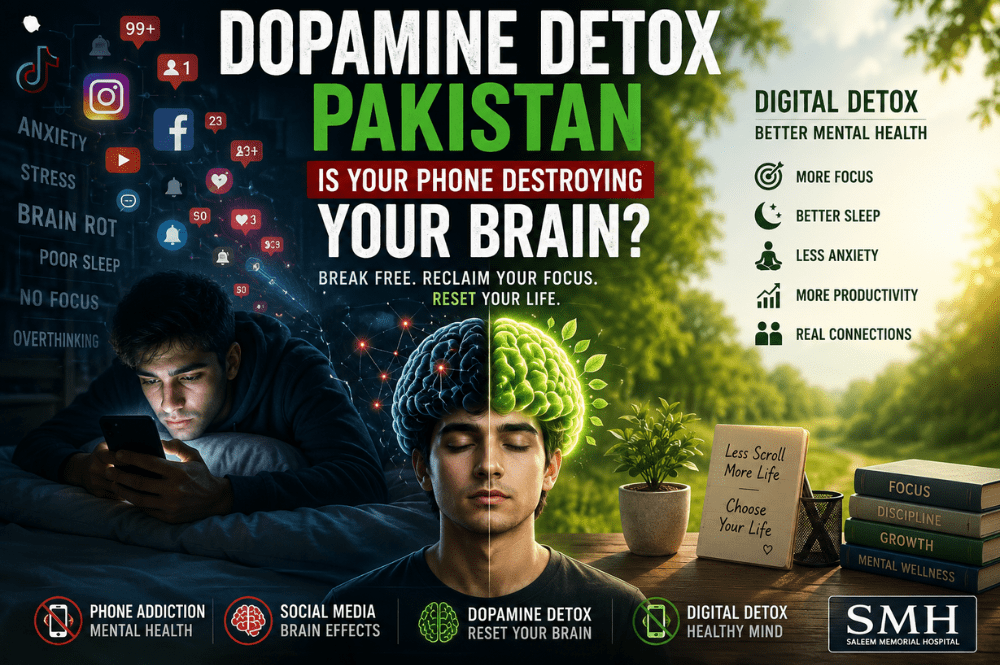
The Silent Digital Addiction in Pakistan
If you have ever found yourself asking, “Why can’t I stop scrolling?”You are not alone. Across Pakistan, especially among students and young professionals, phone usage has slowly turned into a habit that feels almost impossible to control. What usually begins as a quick check on social media often turns into hours of continuous scrolling, watching videos, and switching between apps without any clear purpose. This growing issue is closely linked with the idea of dopamine detox Pakistan, which explains how constant digital stimulation is affecting attention, behavior, and emotional balance. It is not only about spending too much time on phones but about how deeply this behaviour is reshaping the brain’s reward system.
Phone addiction and psychological issues are gaining popularity nowadays. Many people suffer from anxiety, inability to concentrate, disruption of their sleeping patterns, and exhaustion. Social networks were created in such a way as to keep users involved as long as possible, which contributes to social media’s impact on the brain.
In Pakistan, this issue has reached a high level of visibility among the youth population. People are suffering from TikTok addiction and endless scrolling. Therefore, many people face difficulties related to attention, motivation, and overall well-being because they do not know the reasons behind all of this.
What is Dopamine and Why Your Phone Controls Your Brain
It is necessary to understand the essence of dopamine detoxification for Pakistan in order to properly comprehend the concept of dopamine detoxification in Pakistan. It is important to know that dopamine is an essential chemical that regulates motivation, reward, and pleasure within the brain. Every pleasant activity performed stimulates dopamine production in your brain, making you feel satisfied.
However, problems begin when the same system gets under social media control.
Every notification, like, comment, or video triggers a dopamine reaction. Thus, over time, one ends up developing something called dopamine and social media dependency, where your brain demands constant stimulation. Therefore, many people have developed the habit of constantly using their smartphones even when nothing important is going on.
Such behavior is marked by certain phone addiction symptoms that are easy to recognize. For example, a person will unlock their phone constantly without any purpose; become agitated when away from social media, lose sense of time due to scrolling through various sites, etc.
In Pakistan, this phenomenon is usually referred to as brain rot – mental exhaustion due to excessive use of short videos. Their endless-scrolling design delivers continuous dopamine hits, making it harder for the brain to stop. This is one of the major reasons behind the rising TikTok addiction in Pakistan, especially among young users.
Social Media, Anxiety, and Mental Health Damage
One of the most concerning effects of excessive phone use is its impact on mental health. Studies and real-life observations show a strong connection between social media anxiety, depression, and long-term screen exposure. In Pakistan, many young users experience Instagram anxiety, which comes from constant comparison, pressure to look perfect, and the need for online validation. Seeing ideal lifestyles on social media often creates self-doubt, stress, and low confidence.
The question “why can’t I stop scrolling” is not just a habit issue. It is a psychological response. The brain becomes trained to seek constant stimulation even when it is harmful. This leads to a weaker attention span, reduced patience, and emotional imbalance. Screen time affects youth in many ways. Students struggle with concentration in studies, professionals find it harder to complete focused work, and many individuals feel mentally exhausted even after short periods of phone use.
Constant digital exposure also increases stress levels. Instead of dealing with emotions naturally, many people turn to scrolling as a form of escape. This provides temporary relief but increases long-term anxiety. This cycle of overstimulation and emotional fatigue shows why phone addiction and mental health have become a serious concern in modern Pakistan.
Physical Effects of Excessive Screen Time
Excessive screen time not only affects mental health but also creates physical problems in daily life. One of the most common issues is how phones affect sleep in Pakistan, where people stay up late scrolling on social media and struggle to maintain a proper sleep cycle. The blue light from screens also delays melatonin production, which makes it harder to fall asleep naturally.
Another major issue is reduced attention span and constant mental fatigue. Continuous exposure to short videos on platforms like TikTok creates a habit of quick stimulation, which weakens focus on longer tasks. This is a major part of TikTok addiction Pakistan and contributes to declining productivity in students and working individuals.
Over time, people also experience eye strain, headaches, and poor posture due to long hours of phone use. These physical effects combine with mental exhaustion and create a cycle of low energy and reduced performance. This is becoming increasingly common among youth due to the rising screen time effects on youth trends.
How to Do a Dopamine Detox (Practical Reset Guide)
Detoxification through the removal of excessive dopamine is an easy process of regaining mental health after being excessively stimulated by digital technology. The first thing to do is cut down on screen time and limit social media use. It would be better to ease into this and not stop immediately, since the brain will then have an easier adjustment period.
Secondly, it is crucial to substitute unhealthy behavior with healthy ones, such as exercising, walking, and even having dinner with family members. Such substitutes can restore balance between dopamine and social media use since they can provide dopamine in a much healthier manner. Mental health benefits gained from digital detox are easily seen when consistency is achieved. People report improvements in their abilities to concentrate and handle emotions. In addition, anxiety tends to lessen.
Conclusion
Dopamine detox Pakistan is not about completely removing technology but about creating a healthy balance between digital life and real life. Phone addiction and mental health challenges are increasing, especially among youth, but awareness is the first step toward improvement.
When individuals understand social media brain effects and reduce unnecessary screen exposure, they begin to regain control over attention and emotions. This helps in improving sleep, reducing anxiety, and increasing productivity in daily life.
Health awareness institutions like Saleem Memorial Hospital emphasize the importance of mental well-being in a modern digital environment. By adopting mindful screen habits, individuals can protect their mental health and build a more focused and balanced lifestyle.
FAQs
What is dopamine detox Pakistan?
Dopamine detox Pakistan refers to reducing or temporarily stopping excessive use of digital devices and social media to reset the brain’s reward system. It helps reduce phone addiction and mental health issues, improve focus, and break the cycle of constant scrolling and overstimulation.
What are the symptoms of phone addiction?
Common phone addiction symptoms include constantly checking your phone without reason, feeling anxious without social media, losing track of time while scrolling, and difficulty focusing on real-life tasks. Many people also experience restlessness when they are away from their devices.
How does social media affect the brain?
Social media increases dopamine release through likes, notifications, and short videos. Over time, this creates dependency known as dopamine and social media addiction. It can reduce attention span, increase anxiety, and contribute to social media brain effects such as mental fatigue and poor concentration.
Can excessive screen time affect mental health?
Yes, excessive screen time affects youth and adults by increasing stress, anxiety, and depression. Social media anxiety depression is commonly linked to constant comparison, information overload, and a lack of real-world interaction.
How does phone use affect sleep in Pakistan?
How the phone affects sleep in Pakistan is mainly due to blue light exposure and late-night scrolling habits. This delays melatonin production, making it harder to fall asleep and resulting in poor sleep quality and tiredness during the day.
How can I do a dopamine detox?
You can start dopamine detox by reducing social media usage gradually, setting screen time limits, and replacing scrolling with healthy habits like exercise, reading, or outdoor activities. This helps reset the brain and reduces dependency on instant digital rewards.