What Are Kidney Stones?
Kidney stones are hard, solid deposits that form inside one or both kidneys when certain minerals and other substances become highly concentrated in the urine. These deposits can vary in size and may be small enough to pass through the urinary tract naturally or large enough to become stuck and cause pain or blockage. The medical terms used for kidney stones include renal calculi, nephrolithiasis, and urolithiasis.
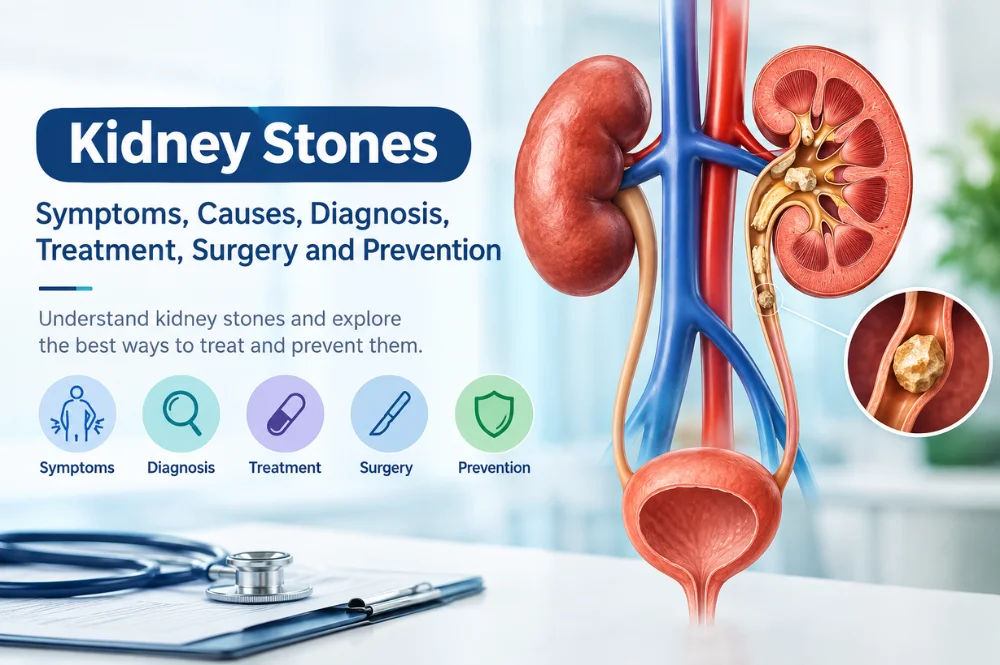
The urinary system comprises of the kidney, ureter, bladder, and the urethra. A stone formed in the kidney could travel down into the ureter, which is the tube that transports urine from the kidney to the bladder. A stone in the ureter is referred to as a ureteric stone or ureteral stone. If a stone gets lodged in the ureter, it prevents the free flow of urine, hence causing a lot of pain.
Not all kidney stones present symptoms. The small stones could leave the urinary tract without presenting any signs. However, the larger stones could get stuck, resulting in painful conditions, hematuria (presence of blood in the urine), urinary obstruction, or infection. The size, position, and composition of the stone determine its symptoms and management technique.
There are different types of kidney stones. These include calcium, uric acid, struvite, and cystine stones. It is helpful to identify the type of kidney stones since treatment methods would differ according to their compositions. If a kidney stone causes persistent symptoms, urinary obstruction, infection, or other complications, medical evaluation by a urologist is important. Appropriate assessment can determine whether the stone can pass naturally or requires medication, a procedure, or surgical removal.
What Are the First Signs and Symptoms of Kidney Stones?
The first signs of kidney stones can vary depending on the stone’s size and where it is located. Very small stones may cause no symptoms at all, while a stone moving through the urinary tract or blocking the ureter can cause sudden and intense symptoms.
The most recognized kidney stone symptoms include sharp pain in the side, back, lower abdomen, or groin. Kidney stone pain may come and go and can become particularly severe when the stone moves through the ureter. Some people may also experience nausea or vomiting because of the intensity of the pain.
Other symptoms may include:
- Blood in the urine, which can make urine appear pink, red, or brown
- Pain or burning while urinating
- A frequent urge to urinate
- Passing only a small amount of urine
- Cloudy or unpleasant-smelling urine
- Nausea and vomiting
- Pain that moves from the back or side toward the lower abdomen or groin
A ureteric stone may produce particularly noticeable pain because the stone can obstruct the narrow passage through which urine travels from the kidney to the bladder. However, symptoms alone cannot confirm that a person has a kidney stone because similar symptoms can occur with urinary infections and other conditions.
When Are Kidney Stone Symptoms an Emergency?
There are some signs that need medical attention immediately. Pain that is either very severe or persistent, fever or shivers, vomiting, blood in urine, or problems urinating might be a sign of complications. An obstruction in the ureter might cause a kidney infection, especially when there are bacteria in the urine. This explains why people should not solely depend on pain relievers and home treatments when their symptoms are severe or deteriorating. A physician will establish whether the stone is causing an obstruction or an infection.
What Causes Kidney Stones and Ureteric Stones?
Kidney stones form when certain substances in the urine become concentrated and begin to form crystals. These crystals can gradually collect and develop into a hard stone. Not drinking enough fluid is an important risk factor because dehydration can make urine more concentrated. However, kidney stones can develop for several different reasons, and the cause is not always the same for every person.
Common kidney stone causes and risk factors include low fluid intake, a family history of kidney stones, previous stones, certain dietary patterns, obesity, recurrent urinary tract infections, and medical conditions that increase the amount of stone-forming substances in the urine. Some medicines can also increase the risk in certain people.
The main types of kidney stones include:
Calcium stones: These are the most common type and may contain calcium oxalate or calcium phosphate.
Uric acid stones: These can develop when urine contains high levels of uric acid or is persistently too acidic. Dietary and metabolic factors can contribute to their formation.
Struvite stones: These are associated with certain urinary tract infections and can sometimes grow quickly.
Cystine stones: These are uncommon and occur because of an inherited condition called cystinuria, which causes cystine to enter the urine in excessive amounts.
Why Do Kidney Stones Move Into the Ureter?
A kidney stone may either stay within the kidney or be transferred to the ureter via the flow of urine. As the ureter is much smaller than the kidney, the stone can get stuck along the way as it passes to the bladder, resulting in ureteric stone symptoms such as intense pain and, sometimes, blockage of urine flow. Knowing what caused the stone is equally crucial after the treatment because those who have suffered from kidney stones once are likely to experience the same problem again.
How Are Kidney Stones Diagnosed?
An accurate kidney stone diagnosis usually involves a combination of the patient’s symptoms, medical history, physical examination, laboratory tests, and imaging. These assessments help doctors determine whether a stone is present and identify its size, location, and possible effect on the urinary tract.
Medical History and Examination
A doctor may ask about the location and severity of pain, urinary symptoms, previous kidney stones, family history, diet, fluid intake, medical conditions, and medicines. A physical examination can provide additional information and help distinguish kidney stone symptoms from other possible causes of abdominal, back, or urinary pain.
Urine Tests
A urine test can identify blood in the urine and may detect minerals or other findings associated with stone formation. It can also help identify signs of a urinary tract infection, such as white blood cells or bacteria. In some cases, collecting and analyzing a stone that has passed can help determine its composition.
Blood Tests
Blood tests may be used to check kidney function and measure substances such as calcium and other minerals that can contribute to stone formation. These results can help doctors understand possible risk factors and plan further treatment or prevention.
Imaging Tests
Imaging plays a crucial role in assessing the size and location of the kidney stones, as well as the presence of any urinary tract obstruction. Ultrasound, X-ray, and CT scan imaging will depend on individual circumstances. In addition to providing valuable details about the stone, CT scan imaging can detect any urinary obstruction or other deviations.
In cases where an individual experiences severe pain that might be linked to the presence of a kidney stone, immediate imaging is necessary. The type of imaging will depend on individual factors like age, pregnancy, symptoms, etc. The accuracy of diagnosis is significant since the treatment of kidney stones is not universal. It depends on individual aspects like size, location, composition, symptoms, infection, or obstruction, etc.
Kidney Stone Treatment | Medicines, Natural Passage and Medical Care
The right kidney stone treatment depends on the stone’s size, location, symptoms, and whether it is causing a blockage or infection. Small stones may sometimes pass naturally through the urinary tract without a procedure. In such cases, a doctor may recommend pain management, adequate fluid intake, monitoring, and medication when appropriate.
Doctors may use kidney stone medicine to control pain or, in selected cases, help a stone pass. Doctors may also prescribe medicines for nausea or other symptoms. The choice of medication depends on the patient’s condition, so kidney stone medicines should be used according to medical advice rather than self-medication.
If a stone is large, causes persistent symptoms, blocks urine flow, or does not pass naturally, a urologist may recommend a stone removal procedure. Infection combined with urinary obstruction may require urgent treatment.
Kidney Stone Removal and Surgery: Which Procedures Are Used?
When a kidney stone cannot pass naturally, different kidney stone removal procedures may be considered. The choice depends mainly on the stone’s size, location, composition, symptoms, and the patient’s overall health.
Shock Wave Lithotripsy (SWL) uses focused shock waves to break a stone into smaller fragments that can pass through the urinary tract. It may be suitable for selected kidney or ureteric stones.
Ureteroscopy involves passing a thin instrument through the urinary tract to reach the stone. The stone may be removed directly or broken into smaller pieces, sometimes using laser energy. This approach can be used for stones located in the ureter or kidney.
Percutaneous Nephrolithotomy (PCNL) is a procedure in which the kidney is accessed through a small opening in the back. It is commonly used for larger or more complex kidney stones that are unlikely to be treated effectively with simpler methods.
When Is Kidney Stone Surgery Needed?
A procedure may be recommended when a stone is too large to pass, causes significant or continuing pain, blocks urine flow, contributes to infection, or remains in the urinary tract despite conservative treatment. A urologist determines the most appropriate option after reviewing imaging and other clinical findings.
How to Avoid Kidney Stones and Prevent Them From Coming Back
Prevention of kidney stones is especially important for those patients who have had stones before because the development of another stone may occur again. Adequate drinking of water is one of the most important factors to reduce the concentration of substances that can precipitate into stones.
Other methods for prevention may include the limitation of excess consumption of salt, keeping a normal body weight, and adhering to a diet depending on the stone type. There is no universal diet for all types of stones, so prevention must be personalized. Patients who have recurrent kidney stones may need to have an analysis of their stones, urine, and other tests to determine the factors that contribute to stone formation. Compliance with the doctor’s advice will help to avoid the formation of new stones.
Visit the Department of Urology at Saleem Memorial Hospital Lahore
FAQs
What are the first signs of kidney stones?
Common early symptoms include sharp pain in the back or side, pain that moves toward the abdomen or groin, blood in the urine, painful urination, frequent urination, nausea, or vomiting.
Can kidney stones pass on their own?
Yes. Some small kidney stones can pass naturally through the urinary tract. Larger stones or stones causing obstruction may require medical treatment or removal.
What is the difference between a kidney stone and a ureteric stone?
A kidney stone forms inside the kidney. When it moves into the ureter, the tube connecting the kidney to the bladder, it is commonly referred to as a ureteric or ureteral stone.
When does a kidney stone require surgery?
Surgery or another removal procedure may be considered when a stone is too large to pass, causes persistent symptoms, blocks urine flow, or is associated with complications such as infection.
How can I prevent kidney stones?
Adequate hydration, limiting excessive salt intake, maintaining a healthy lifestyle, and following stone-specific dietary advice can help reduce the risk of recurrence.
Can kidney stones come back after treatment?
Yes. Having one kidney stone can increase the risk of developing another. Identifying the stone type and addressing individual risk factors can help with long-term prevention.