
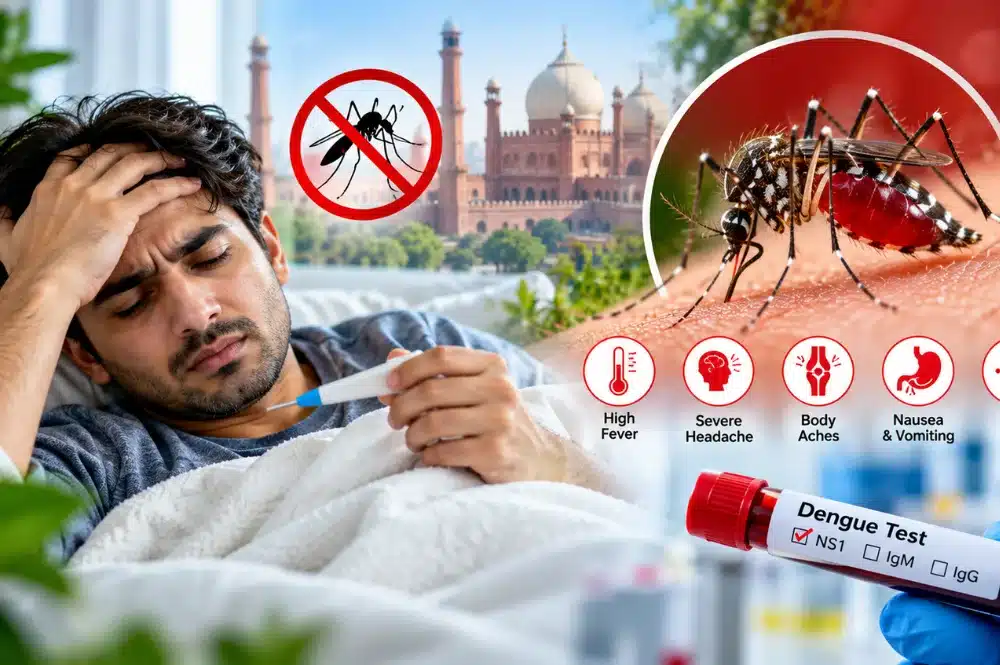
Dengue fever is a viral infection transmitted through the bite of an infected Aedes mosquito. It is an important public health concern in Lahore and other parts of Pakistan, particularly during periods when rainfall, standing water, and mosquito breeding increase. The infection can affect children and adults, causing symptoms ranging from mild fever and body aches to potentially life-threatening complications.
It is observed that many individuals have been able to recover from the disease with the aid of proper guidance, hydration and rest. However, there are some patients who suffer from severe dengue, which may lead to the occurrence of bleeding, leakage of fluids from the blood vessels, shock and organ problems. It will also allow one to identify the symptoms and when it is time for medical help to prevent serious delays.
This guide explains dengue fever symptoms, seven important warning signs, the stages of dengue illness, available diagnostic tests, and treatment options in Lahore, helping patients and families make informed healthcare decisions.
Common Early Symptoms of Dengue Fever
Sudden High Fever: Most cases of dengue infection start with a sudden onset of high fever, which might go up to 39-40°C. The fever lasts for some days and is accompanied by shivering, sweating, and overall weakness in the body. Nonetheless, there will not be an extremely high fever for all patients.
Severe Headache and Pain Behind the Eyes: Persistent headaches are symptoms of dengue infection. Some patients also suffer from eye pain, especially when they move their eyes. This combination will assist in raising suspicion for dengue with fever and body aches.
Muscle and Joint Pain: One of the common symptoms of dengue disease is muscle, joint, and bone pain. It is because of this that the disease is also referred to as ‘breakbone fever’. There are different levels of pain experienced, which can make simple activities difficult.
Nausea and Vomiting: One of the digestive issues that arise from dengue fever is nausea and vomiting. Mild nausea or occasional vomiting may occur early, while persistent vomiting is a warning sign that requires urgent medical assessment.
Skin Rash: Some individuals will experience red rashes or dots on their skin. Rashes may occur at an early stage of the disease or as the body’s fever starts to improve. It is important to note that not all people who have dengue will suffer from skin rashes.
Fatigue and Loss of Appetite: Dengue often leads to fatigue, loss of appetite, and general weakness. The signs can persist despite the disappearance of fever throughout the process of recovery.
How Is Dengue Different from Ordinary Viral Fever?
The symptoms of Dengue may resemble those of Influenza and other viral diseases. But the presence of rapid fever, joint and muscle pain, headache, eye pain, and rash may indicate that the patient is suffering from Dengue fever. A major concern is that dengue can sometimes become more serious when the fever starts decreasing. Ordinary viral illnesses generally improve as fever settles, whereas some dengue patients develop warning signs during this period.
Because these symptoms overlap with other infections, dengue fever cannot be diagnosed from symptoms alone. A healthcare professional may recommend appropriate testing based on the patient’s condition and the day of illness.
When Should You Consult a Doctor for Early Dengue Symptoms?
For individuals showing symptoms of fever accompanied by severe pain in the body or headache in Lahore, they should consider visiting the doctor to receive proper guidance. This is even more important for people like pregnant women, children, elderly patients, and patients with pre-existing conditions. The physician is able to assess hydration status, recognize red flags, decide if dengue testing is required, and inform about when certain symptoms need urgent hospital care.
Seven Warning Signs of Dengue Fever You Should Never Ignore
Many dengue sufferers can overcome the disease without developing any complication, but some patients suffer from severe dengue due to one of these three reasons: leaking fluid from blood vessels, unstable blood circulation, or bleeding and organ complications.
One of the most important facts about dengue is that warning signs frequently appear when the fever begins to decrease, usually around days 3–7 of illness. Patients and families may mistakenly assume that a falling temperature means the infection is resolving.
The following seven warning signs require urgent attention.
1. Severe Abdominal Pain or Tenderness
Pain in the abdomen is one of the symptoms that should not be ignored as a warning sign of dengue. There is discomfort felt in the entire abdomen or tenderness when pressure is applied to the abdomen. This can be as a result of complications arising from increased vascular permeability and fluid loss. It must not be considered normal indigestion, especially if it occurs when the fever subsides.
2. Persistent Vomiting
Nausea and vomiting may be experienced sometimes when there is uncomplicated dengue fever. Nonetheless, persistent vomiting should be taken seriously as it may be an indication that the disease is progressing and may also lead to dehydration. Patients who are unable to retain fluids may need their hydration and circulation status assessed immediately. Medical teams may recommend carefully monitored fluid replacement depending on the patient’s condition.
3. Bleeding from the Nose or Gums
Dengue infection may have an impact on the body’s blood vessels and normal coagulation process in the body. Patients may experience bleeding in their nose, gums, or other mucosal sites. Although the bleeding is mild, it is important to report the bleeding since it might occur together with other symptoms of dengue.
4. Blood in Vomit or Stool
The presence of vomiting blood and passing of black, tarry feces may suggest gastrointestinal bleeding. This is a medical emergency and needs urgent attention from medical professionals. Patients must not try to control these symptoms themselves or wait for the results of blood tests before treatment.
5. Extreme Tiredness, Drowsiness or Restlessness
Extreme lethargy, excessive sleepiness, confusion, and restlessness may signify worsening conditions. This is contrary to the usual feeling of fatigue in case of viral fever. If a patient becomes hard to arouse or overly restless, there is need for urgent assessment.
6. Rapid Breathing or Difficulty Breathing
Difficult breathing may be observed in severe dengue patients, whether due to fluid around the lungs or poor circulation. Persons with fast breathing, difficulty in breathing, or evident respiratory distress must be assessed emergently. The signs must never be considered as simply being weak.
7. Cold, Pale Skin, Severe Dizziness or Fainting
Cold or clammy skin, marked dizziness, fainting, and other signs of poor circulation may indicate shock, a life-threatening complication of severe dengue. The treatment for shock involves immediate hospital admission with the evaluation of blood circulation and fluid balance.
Why Are Warning Signs More Dangerous When Fever Goes Down?
There are usually distinct stages for dengue disease. When a patient reaches the critical stage, there is increased permeability in the small blood vessels, making it possible for fluid to go from the blood vessels to adjacent body tissue. This decreases the volume of blood within the circulatory system and sometimes results in shock. The critical stage normally starts when the fever subsides. This is why continued monitoring is essential.
If any dengue warning sign appears, seek emergency medical care immediately. Do not wait for severe bleeding, a very low platelet count, or multiple symptoms to develop.
How Many Days Does Dengue Fever Last? Understanding the Stages
The fever associated with dengue generally lasts 2–7 days, while most patients recover from the acute illness within approximately one to two weeks. However, the exact duration depends on individual health, disease severity, and whether complications develop.
For some individuals, fatigue can be experienced even several weeks after their fever has subsided. There are three stages of dengue disease that are usually mentioned in medical advice: febrile stage, critical stage, and recovery stage. The knowledge about the stages can help one understand changes in symptoms throughout the disease.
Stage 1: Febrile Phase | The Beginning of Illness
The febrile period generally lasts from two to seven days. In this phase, the patients can suffer from high fever, headache, eye pain, body aches, nausea, and rash. Dehydration might happen due to fever, lack of fluid intake, sweating, or vomiting. The patients should keep themselves properly hydrated and follow doctors’ instructions about fever control.
The doctor might opt for performing the dengue NS1 antigen test or PCR early on during this stage, along with a complete blood count when indicated clinically. Even though most patients do not experience any major problems at this stage, this needs to be done as complications might occur in the future.
Stage 2: Critical Phase | When Complications May Develop
This stage usually takes place on day 3-7, usually as the fever begins to fall. For those that enter this stage, it usually lasts between 24-48 hours. Some people who enter this stage develop increased fluid leaking from their blood vessels. When there is excessive leaking of fluids, blood circulation can be compromised, leading to shock.
The doctors will determine deterioration in a patient through assessing symptoms, vital signs, hydration status, output of urine, and lab values like hematocrit levels and platelet counts. Not all patients suffering from dengue have a critical period, but those patients who suffer from continuous vomiting, abdominal pain, bleeding, breathing difficulties, and weakness need immediate medical care.
Stage 3: Recovery Phase | Gradual Improvement
During the recovery phase, fluids which have entered the tissues slowly make their way back into circulation, appetite picks up, and patients generally begin feeling stronger. Platelets may return to normal during this phase; this depends from one person to another. It is reassuring to have the platelet levels rise but this must be evaluated relative to the patient’s clinical picture.
It may be the case that the patient will feel tiredness, fatigue or weakness after having the acute illness. Rest, proper nutrition, and consultation as advised by the doctor may facilitate recovery for those who have had dengue. Patients who have experienced severe dengue may require additional monitoring after discharge.
Are There Four Stages of Dengue Fever?
Some online searches refer to the “four stages of dengue fever.” However, standard clinical guidance describes three main phases: febrile, critical, and recovery. The incubation period, which occurs between the infected mosquito bite and the onset of symptoms, is sometimes discussed separately. It is not normally classified as one of the three clinical phases of symptomatic dengue.
How Long Should a Dengue Patient Be Monitored?
Monitoring will be based on the presentation of the patient, his or her risk factors, laboratory findings, and overall clinical presentation. The patients who are stable and do not show any signs or symptoms need to be monitored at home under the right medical supervision and proper follow up. Closer monitoring might be required when the fever starts to go down especially in those patients whose symptoms are getting worse and laboratory findings are changing. Patients should not assume that dengue has resolved simply because the fever has stopped.
Dengue Fever Tests and Treatment in Lahore
Accurate diagnosis and timely medical management are important for patients with suspected dengue fever. Since dengue symptoms overlap with several other infections, doctors use clinical assessment and appropriate laboratory tests to support diagnosis. The choice of test depends partly on how many days have passed since symptoms began. Different tests detect the virus or the body’s immune response at different stages.
Which Blood Tests Are Used to Diagnose Dengue Fever?
Dengue NS1 Antigen Test
This test identifies a dengue virus-specific protein present in the bloodstream. It is especially valuable during the early period of infection, usually within the first week from the start of symptoms. The positive test indicates an acute case of dengue infection. Yet, the absence of the NS1 protein does not necessarily mean that dengue has been ruled out, especially when clinical suspicion remains high.
Dengue IgM Antibody Test
IgM antibodies typically appear several days after the onset of symptoms. Testing becomes useful starting at day four or five, although this can differ. The presence of IgM antibodies indicates a recent infection with dengue fever; however, results need to be carefully interpreted since antibodies can cross-react with other similar viruses.
Dengue PCR Test
PCR testing detects dengue viral genetic material. It is particularly useful during the early phase of infection and can provide direct evidence of an acute dengue infection. Availability and suitability depend on clinical circumstances and laboratory services.
Complete Blood Count (CBC)
A CBC measures blood components, including white blood cells, platelets, and hematocrit. It is commonly used to help monitor dengue patients. Platelet counts may decrease during illness, while hematocrit may rise when plasma leakage causes hemoconcentration. These findings are interpreted alongside symptoms, fluid balance, and other clinical observations. A CBC alone cannot confirm dengue infection.
How Is Dengue Fever Treated?
There is no specific antiviral medication routinely used to cure dengue fever. Treatment focuses on symptom relief, appropriate fluid management, and early identification of complications. Patients with uncomplicated dengue may recover at home under medical guidance, while those with warning signs or severe illness require hospital assessment.
Rest and Hydration
Adequate fluid intake is important because fever, sweating, vomiting, and reduced appetite can contribute to dehydration. Patients who can drink normally may be advised to take water and suitable oral fluids. However, fluid recommendations should be individualized, particularly for people with heart or kidney conditions.
Fever and Pain Management
Paracetamol may be recommended for fever and discomfort when used according to medical advice and appropriate dosing. Aspirin, ibuprofen, and other nonsteroidal anti-inflammatory medicines should generally be avoided because they can increase the risk of bleeding.
Monitoring and Follow-Up
Doctors may recommend repeat blood counts or additional assessment depending on the patient’s symptoms, day of illness, and risk of complications. Monitoring is especially important when fever decreases, because this is when some patients develop warning signs.
Hospital Treatment for Severe Dengue
Patients with severe dengue may require hospitalization, close monitoring of blood pressure and urine output, carefully controlled intravenous fluids, and treatment for bleeding or other complications. Fluid treatment must be adjusted carefully. Both insufficient and excessive intravenous fluids can be harmful, particularly during the critical and recovery phases.
Is a Low Platelet Count Dangerous in Dengue?
A decreasing platelet count is common in dengue, but it does not automatically mean the patient has severe dengue. Doctors assess the overall clinical condition, including bleeding, blood pressure, hematocrit changes, hydration, and signs of plasma leakage.
A patient with a relatively higher platelet count may still develop serious complications, while another patient with a lower count may remain clinically stable. Platelet transfusions are not routinely recommended solely because the platelet count is low. They are considered in specific clinical circumstances, such as significant bleeding, based on specialist assessment.
When Should Dengue Patients Seek Hospital Treatment in Lahore?
Patients should seek emergency medical care if they experience persistent vomiting, severe abdominal pain, bleeding, breathing difficulty, fainting, unusual drowsiness, or other warning signs. People who cannot maintain adequate hydration or have important underlying health conditions may also need closer assessment.
At Saleem Memorial Hospital Lahore, patients can enquire about medical consultations and available diagnostic or hospital services for suspected dengue fever. A qualified healthcare professional can determine the appropriate investigations, monitoring, and level of care based on the patient’s condition.
Dengue Fever in Children and Prevention in Pakistan
Dengue fever can affect both adults and children. Young children may have difficulty explaining their symptoms, making it important for parents to recognize changes in behavior, feeding, and general health.
Dengue Fever Symptoms in Children
Children with dengue may experience fever, headache, body aches, nausea, vomiting, rash, or unusual tiredness. Some younger children may become irritable, refuse food or fluids, or appear less active than usual. Parents should seek immediate medical attention if a child develops persistent vomiting, severe abdominal pain, unusual bleeding, breathing difficulty, marked drowsiness, or signs of dehydration.
How Can Dengue Fever Be Prevented?
Dengue prevention primarily involves reducing mosquito breeding sites and protecting people from mosquito bites.
Practical preventive measures include:
- Emptying or covering containers that collect standing water.
- Cleaning water tanks, flowerpots, and other potential breeding areas.
- Using appropriate mosquito repellents according to product instructions.
- Installing window screens and using mosquito nets when necessary.
- Wearing clothing that covers the arms and legs, particularly during mosquito-active periods.
Aedes mosquitoes commonly bite during the daytime, although bites may also occur at other times.
Is There a Vaccine for Dengue Fever?
Dengue vaccines exist, but they are not suitable or recommended for everyone. Eligibility depends on factors including age, previous dengue infection, vaccine type, and national recommendations. People in Lahore should consult qualified healthcare professionals and relevant public-health guidance rather than assuming vaccination is routinely available or appropriate.
When Should You Go to Hospital for Dengue Fever in Lahore?
Not every dengue patient requires hospitalization. Some people with mild symptoms can recover at home under medical guidance, provided they can drink adequate fluids, have no warning signs, and can return promptly for reassessment. However, dengue can become serious within a short period, especially around the time the fever begins to settle.
When Is Emergency Hospital Care Necessary?
Seek immediate medical attention if the patient experiences severe abdominal pain, repeated vomiting, unusual bleeding, difficulty breathing, fainting, confusion, or extreme weakness. Hospital assessment is also important when a patient cannot maintain adequate fluid intake or shows signs of dehydration. Pregnant patients, infants, older adults, and people with significant underlying medical conditions may require closer monitoring.
Dengue Fever Assessment at Saleem Memorial Hospital Lahore
Patients experiencing suspected dengue fever in Lahore can seek medical assessment to determine the severity of their symptoms and the need for investigations or further care.
At Saleem Memorial Hospital Lahore, patients can contact the hospital to enquire about medical consultations, dengue-related testing, and the availability of appropriate hospital services. Clinical assessment helps determine whether a patient can be monitored safely at home or requires admission, specialist evaluation, or emergency treatment.
Conclusion
Recognizing dengue fever symptoms early can help patients seek timely medical advice. While many people recover within one to two weeks, warning signs such as persistent vomiting, abdominal pain, bleeding, or breathing difficulty should never be ignored. If you or a family member develops suspected dengue symptoms, consult a qualified healthcare professional. If warning signs appear, go to the nearest emergency department immediately.
FAQs
What are the 7 warning signs of dengue fever?
Seven important danger signs are severe abdominal pain, persistent vomiting, nose or gum bleeding, blood in vomit or stool, extreme tiredness or restlessness, breathing difficulty, and cold or pale skin with dizziness or fainting. Any of these requires urgent medical assessment.
What are the first signs of dengue fever?
Early dengue symptoms commonly include sudden fever, severe headache, pain behind the eyes, muscle and joint aches, nausea, and rash. Some patients experience only mild symptoms.
How many days does dengue fever last?
Dengue fever commonly lasts 2–7 days, and most patients recover within one to two weeks. However, fatigue may continue longer, and serious complications can develop as fever decreases.
How can dengue fever be treated?
Dengue treatment involves rest, appropriate hydration, fever management, and medical monitoring. Paracetamol may be recommended, while aspirin and ibuprofen should be avoided. Severe cases require hospital-based supportive treatment.
What are the three stages of dengue fever?
The three clinical phases are the febrile phase, critical phase, and recovery phase. The critical phase often begins as fever decreases and is the period when serious complications may develop.
Can you die from dengue fever?
Yes. Severe dengue can cause shock, major bleeding, and organ damage and may become life-threatening. Early recognition of warning signs and prompt hospital treatment can significantly improve outcomes.
What are dengue fever symptoms in children?
Children may develop fever, headache, body aches, vomiting, rash, irritability, or unusual tiredness. Persistent vomiting, bleeding, breathing difficulty, and marked drowsiness require urgent medical attention.
What are dengue fever symptoms in Urdu?
Dengue ki aam alamat mein tez bukhar, sar dard, aankhon ke peechay dard, jism aur joron mein dard, matli, ulti aur jild par daanay shamil hain. Agar pait mein shadeed dard, lagataar ulti ya khoon aaye to foran hospital jayen.
Which blood tests confirm dengue fever?
NS1 antigen testing and PCR can confirm acute dengue infection, particularly during the early days of illness. IgM antibody testing helps identify recent infection. CBC supports monitoring but cannot independently confirm dengue.
When should a dengue patient go to the hospital?
A dengue patient should seek emergency care immediately if warning signs appear, including severe abdominal pain, persistent vomiting, bleeding, breathing difficulty, fainting, or unusual drowsiness. Patients at higher risk may need earlier assessment and closer monitoring.