
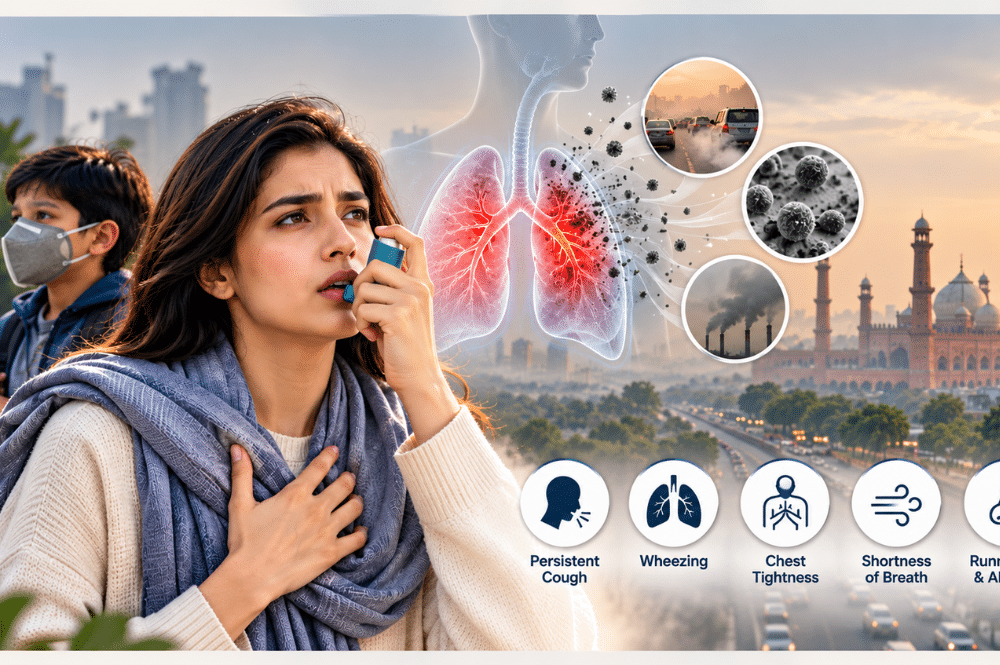
Every year, Lahore experiences periods of severe smog and poor air quality, particularly during the cooler months. For many residents, this means more than reduced visibility. Polluted air can cause persistent coughing, throat irritation, chest tightness, and breathing difficulties, especially in people with asthma or other respiratory conditions.
As air pollution levels rise, people often search for smog allergy symptoms in Lahore to understand whether their discomfort is caused by pollution, seasonal allergies, or asthma. Although these conditions can share similar symptoms, they are not always the same. Smog can irritate the airways, trigger asthma symptoms, and worsen existing respiratory problems.
Understanding how air pollution affects your lungs, recognizing early warning signs, and knowing when to consult a chest specialist can help you manage symptoms and protect your respiratory health.
How Air Pollution Affects Breathing
Smog contains a number of air pollutants, such as fine particulate matter (PM2.5) and nitrogen dioxide, among others. There are various factors in Lahore that may cause poor air quality, such as traffic pollution, industrial activities, dust, burning, and weather conditions. During smog episodes, these pollutants may remain concentrated near ground level, increasing exposure.
The problem with fine particles, such as PM2.5, is that they can enter deeper into the lungs. This may lead to irritation of the respiratory tract, inflammation, and breathing difficulties for those with sensitive airways.
What Are Smog Allergy Symptoms?
The term “smog allergy” is commonly used to describe symptoms that appear or worsen during periods of air pollution. However, smog exposure does not always cause a true allergic reaction. In many cases, pollutants directly irritate the eyes, nose, throat, and airways.
Common symptoms include:
- Persistent or dry coughing
- Throat irritation and soreness
- Sneezing or a runny nose
- Burning or watery eyes
- Chest tightness or discomfort
- Wheezing or shortness of breath
- Increased breathing difficulty during outdoor activity
These symptoms may become more noticeable after spending time near busy roads, construction sites, or other polluted environments.
Why Does Smog Make Asthma Worse?
Asthma is a disease characterized by inflammation of the air passages, which become hypersensitive and may narrow upon coming into contact with specific stimulants. Air pollution acts as an irritant to the sensitive airways and leads to inflammation resulting in wheezing, chest tightness, coughing, and breathing difficulties.
Individuals with asthma may discover that they experience their symptoms more often during the smog season of Lahore. Some people may need their reliever drugs more often, have disrupted sleeping patterns, and find physical activities more challenging.
Poor air quality can trigger asthma attacks, particularly in people whose asthma is not adequately controlled. However, coughing during smog does not automatically mean someone has asthma.
Can Air Pollution Cause Asthma?
Several studies have indicated that prolonged exposure to traffic air pollution increases the likelihood of having asthma, especially in children. Air pollution can also trigger symptoms and worsen existing asthma in adults and children.
Nonetheless, there are several determinants of asthma. These include genetics, environmental factors, allergens, and other variables. Smog in itself may not be enough to cause someone to develop asthma.
If patients have persistent problems with their respiratory system, then it is recommended that they see a doctor for diagnosis because the problem may not only be due to the seasonal smog.
Common Symptoms of Smog Exposure and Allergic Asthma
The smog and allergic asthma may have many of the same symptoms, thus it is not always easy to differentiate between the two of them. The pattern, frequency, and severity of symptoms can provide useful clues. For example, symptoms that occur repeatedly at night, during exercise, or after exposure to specific triggers may suggest asthma and require medical evaluation.
Persistent Coughing and Wheezing
Polluted air can irritate the airways, causing a dry or persistent cough. Wheezing, which means the whistling sound while breathing, may develop because of narrow airways. Frequent coughing, particularly at night or alongside wheezing, may indicate asthma and requires medical evaluation.
Chest Tightness and Shortness of Breath
The smog may aggravate the feeling of chest tightness and breathlessness, especially in people suffering from asthma or chronic obstructive pulmonary disease (COPD). Breathlessness during routine activities or worsening chest discomfort should not be ignored.
Severe breathlessness, difficulty speaking, blue or grey lips, or confusion requires immediate emergency medical care.
Sneezing, Runny Nose, and Eye Irritation
Air pollution can cause sneezing, nasal congestion, watery eyes, and throat irritation. These signs could be mistaken for allergic rhinitis despite the fact that the smog is just irritating the respiratory system without provoking an actual allergic reaction.
Allergic Asthma Symptoms in Children
Children are especially vulnerable to air pollution due to the fact that their lungs are developing at that stage. Asthma symptoms include recurring cough, wheezing, tightness of the chest, and difficulty breathing, which occur mostly during physical exertion or at night. Parents should consult a healthcare professional if these symptoms persist or repeatedly worsen during Lahore’s smog season.
Smog Allergy vs Asthma | What’s the Difference?
Although people often use the terms “smog allergy,” “allergic asthma,” and “asthma” interchangeably, they describe different conditions or symptom patterns. Smog-related irritation occurs when pollutants directly irritate the respiratory system. Allergic asthma is a form of asthma in which allergens contribute to airway inflammation and symptoms. Air pollution can worsen either allergic or non-allergic asthma.
Understanding these differences is important because treatment depends on the underlying cause.
Smog Allergy vs Allergic Asthma
| Feature | Smog-Related Irritation | Allergic Asthma |
|---|---|---|
| Main trigger | Air pollutants and irritants | Allergens such as pollen, dust mites or animal dander |
| Common symptoms | Cough, throat irritation, watery eyes, nasal discomfort | Wheezing, coughing, chest tightness, breathlessness |
| Symptom pattern | Often worsens with pollution exposure | May recur with allergens, at night or during exercise |
| Underlying condition | May occur without chronic airway disease | Chronic inflammatory airway disease |
| Diagnosis | Clinical assessment and exposure history | Clinical assessment, lung-function testing and sometimes allergy testing |
| Treatment | Reduce exposure and manage symptoms | Asthma medication, trigger management and follow-up |
These patterns can overlap, and symptoms alone cannot reliably distinguish the conditions.
Is Allergic Asthma the Same as Regular Asthma?
Allergic asthma is one form of asthma. The major point of difference is that allergens are responsible for provoking symptoms. Patients with allergic asthma can develop breathing difficulty after being exposed to dust mites, pollen, molds, or animal allergens. Non-allergic asthma can be provoked by infections, physical activity, cold air, smoke, or air pollution. Both types can cause airway inflammation, airway constriction, wheezing, and breathing difficulties. Both conditions require proper diagnosis and treatment.
How Do Doctors Diagnose Asthma?
A chest specialist or pulmonologist usually begins by reviewing symptoms, medical history, environmental exposures, and possible triggers. When appropriate, the doctor may recommend spirometry, a lung-function test that measures how much air a person can breathe out and how quickly. Testing before and after a bronchodilator may help identify variable airflow limitation associated with asthma.
Further tests, like peak flow measurement or allergy test, may be performed depending on patients’ symptoms and signs. A normal result of spirometry at one visit does not always rule out asthma, especially in case of variability in symptoms. Further evaluation may be needed.
Can Smog Trigger an Asthma Attack? Risks for Children and Adults
Yes, smog and air pollution can provoke attacks of asthma due to irritation of sensitive airways and increased inflammation. During smog season in Lahore, asthma sufferers can worsen their symptoms like cough, wheezing, chest tightness, and shortness of breath, particularly during outdoor activities.
Children are most susceptible since their lungs are not yet fully developed. Elderly patients and those with asthma, chronic obstructive pulmonary disease (COPD), and heart disease might be at risk for breathing problems. Pregnant women must take extra care to avoid exposure to polluted air. An asthma attack happens when the breathing passage becomes inflamed and narrows down, making it hard to breathe. While some may experience mild asthma attacks, severe cases might turn out to be fatal without any treatment.
Seek emergency medical care immediately if someone experiences severe breathlessness, difficulty speaking, blue or grey lips, confusion, or worsening symptoms despite prescribed reliever medication. People experiencing frequent asthma symptoms during Lahore’s smog season should consult a chest specialist for proper assessment and treatment.
Smog Allergy and Asthma Treatment | How to Protect Your Lungs
Managing smog allergy symptoms in Lahore involves reducing pollution exposure, identifying respiratory triggers, and following appropriate medical treatment. Pollution-related irritation may improve with reduced exposure, while asthma usually requires ongoing management.
The Air Quality Index (AQI) in Lahore assists the citizens to organize their outdoor plans. During unhealthy air, one should avoid unnecessary outdoor activities, do not exercise strenuously by busy roads, and consider wearing a properly fitted N95 respirator as needed.
Improving the quality of air inside our homes is as critical as improving outside air. Avoid smoking inside your home and burning of incense sticks and similar pollutants. HEPA air purifiers may help reduce airborne particles when used correctly. In the case of diagnosed asthma, the physician might recommend inhaled corticosteroid-containing treatment and adequate reliever medications. Patients should follow their prescribed treatment plan, use inhalers correctly, and attend recommended follow-up appointments.
Antihistamines may relieve associated nasal allergies but do not replace asthma treatment. Antibiotics are generally unnecessary unless a bacterial infection is diagnosed. Persistent coughing, wheezing, or breathing difficulties require medical evaluation. Avoid changing asthma medication without consulting a healthcare professional.
When to Consult a Chest Specialist at Saleem Memorial Hospital Lahore
Persistent coughing, wheezing, chest tightness, or shortness of breath should not always be attributed to seasonal smog. These symptoms may indicate asthma, allergies, COPD, or another respiratory condition requiring medical attention.
Patients experiencing recurring breathing difficulties, nighttime coughing, or worsening asthma symptoms should consult a qualified pulmonologist in Lahore for proper diagnosis and treatment. At Saleem Memorial Hospital (SMH), Lahore, the Pulmonology Department provides specialist care for respiratory conditions, including asthma, chronic cough, COPD, and other lung-related disorders.
Pulmonology Specialists at Saleem Memorial Hospital
Dr. Faisal Hasan Zahid | Pulmonologist
Qualifications: MBBS, FCPS – Pulmonologist
Expertise includes asthma, pneumonia, tuberculosis, lung cancer, viral infections, bronchoscopy, and management of patients requiring invasive or non-invasive ventilation.
Consultation timings: Monday to Saturday, 6:00 PM–7:00 PM.
Dr. Shamshad Rasul Awan | Pulmonologist
Qualifications: MBBS, MCPS – Pulmonology, FCPS – Pulmonology, FCCP (USA)
Special interests include chronic cough, asthma, COPD, and tuberculosis. He is a former faculty member and supervisor for FCPS Pulmonology (CPSP).
Consultation timings: Monday to Thursday, 10:00 AM–12:00 PM; Friday, 10:00 AM–11:00 AM.
Dr. Muhammad Ahmad | Consultant Physician, Pulmonologist, Sleep and ICU Specialist
Qualifications: MBBS, FCPS – Pulmonology, FCPS – Critical Care, FRCP (London), CHPE
Expertise includes allergies, asthma, COPD, lung cancer, bronchoscopy, sleep studies, pulmonary rehabilitation, pleural biopsy, and intensive care.
Consultation timings: Monday to Saturday, 12:00 PM–3:00 PM.
Dr. Arslan Iqbal | Consultant Pulmonologist
Qualifications: MBBS, FCPS – Pulmonology
Expertise includes respiratory and critical care procedures, bronchoscopy, CT- and ultrasound-guided lung mass biopsies, chest intubation, and invasive and non-invasive ventilation.
FAQs
What are the common smog allergy symptoms in Lahore?
Common smog allergy symptoms in Lahore include persistent coughing, sneezing, watery eyes, throat irritation, chest tightness, and breathing difficulties. These symptoms may worsen during periods of poor air quality, particularly in people with asthma or respiratory allergies.
Can air pollution cause asthma?
Long-term exposure to air pollution is associated with an increased risk of developing asthma, especially in children. Polluted air can also trigger asthma attacks and worsen symptoms in people who already have asthma.
What is the difference between allergic asthma and regular asthma?
Allergic asthma is a type of asthma triggered by allergens such as pollen, dust mites, and mould. Non-allergic asthma may be triggered by exercise, respiratory infections, cold air, or pollution. Both conditions cause airway inflammation and breathing difficulties.
Can smog cause coughing and chest tightness?
Yes, smog can irritate the respiratory system, causing persistent coughing, chest tightness, and wheezing. People with existing asthma or other lung conditions may experience more severe symptoms during Lahore’s smog season.
Is allergic asthma dangerous?
Allergic asthma can become dangerous if symptoms are poorly controlled or a severe asthma attack occurs. Proper diagnosis, prescribed medication, and avoiding known triggers can help reduce the risk of serious complications.
Can allergic asthma cause a life-threatening attack?
Yes, severe allergic asthma attacks can be life-threatening. Warning signs include extreme breathlessness, difficulty speaking, blue or grey lips, and symptoms that do not improve with prescribed reliever medication. Immediate emergency care is essential.
How does air pollution affect children with asthma?
Air pollution can irritate children’s developing lungs and worsen asthma symptoms, including coughing, wheezing, and shortness of breath. Children with asthma may experience more frequent flare-ups during periods of high pollution.
What is the best treatment for smog-related breathing problems?
Treatment depends on the underlying condition. Reducing pollution exposure, monitoring air quality, and following prescribed asthma medication can help manage symptoms. Persistent breathing problems should be evaluated by a qualified pulmonologist.
Which doctor should I consult for smog allergy or asthma in Lahore?
A pulmonologist (chest specialist) can diagnose and manage asthma, persistent coughing, wheezing, and other breathing problems. Patients can consult the Pulmonology Department at Saleem Memorial Hospital Lahore for respiratory assessment and appropriate treatment.
For consultation timings: Please confirm with the hospital on the SMH appointment booking page. For severe breathing difficulties or symptoms of a serious asthma attack, seek emergency medical attention immediately.