
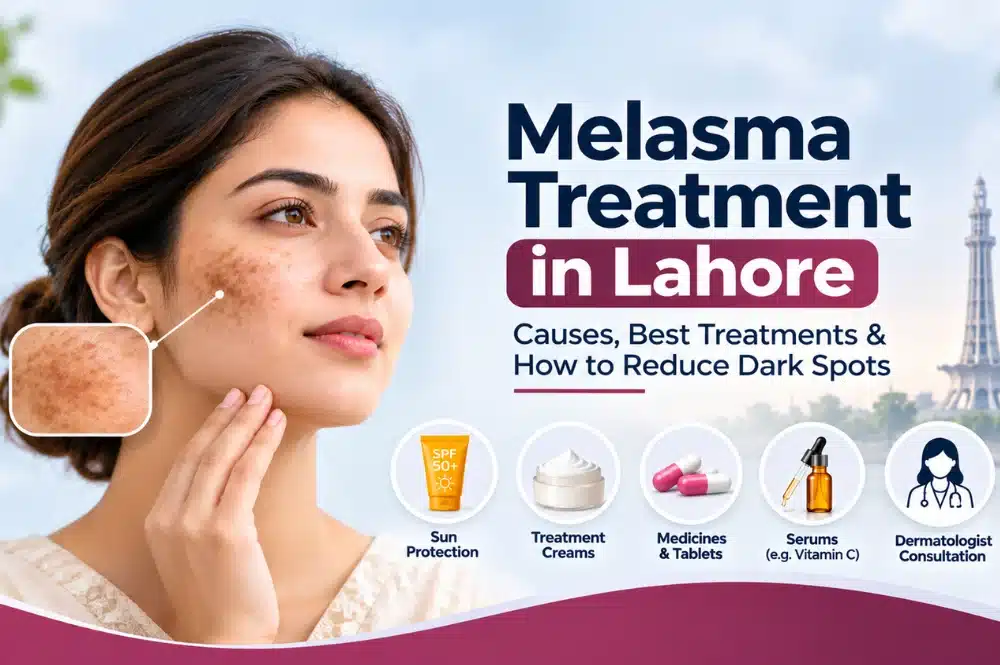
Dark spots and uneven skin tone are common concerns among people living in Lahore and across Pakistan. One possible cause is melasma, a skin condition that produces brown or grey-brown patches, particularly on the face. Sun exposure, hormonal changes, and genetic factors can contribute to its development.
Many people searching for melasma treatment in Lahore want to know why these patches appear, which creams may help, and whether pigmentation can be removed permanently. Although melasma is generally harmless, it can be persistent and may return after treatment.
Knowing about the underlying causes of melasma, being aware of the signs that indicate its development, and using proper skincare can aid the management of this condition. A good dermatologist will be able to prescribe the right treatment for melasma according to a person’s skin type, his or her medical history, and the intensity of discoloration.
What Is Melasma? Symptoms and Dark Spots on the Face
Melasma is a common skin pigmentation condition that causes flat, brown, or grey-brown patches, usually on the cheeks, forehead, upper lip, and nose. It develops when pigment-producing cells in the skin produce excess melanin.
Melasma is not contagious and usually does not cause pain or itching. The condition is common among females who are in their reproductive age although men can be affected too. Those individuals who have medium and dark skin are considered to be more prone to develop melasma.
Common Symptoms of Melasma
Melasma usually appears as:
- Brown, tan, or grey-brown patches on the face
- Irregular areas of darker pigmentation
- Similar patches on both sides of the cheeks or forehead
- Darkening that becomes more noticeable after sun exposure
Unlike acne, melasma does not typically cause raised bumps, swelling, or inflammation. The characteristic sign of the condition is the discoloration of the skin.
Is Every Dark Spot on the Face Melasma?
No. Not every dark spot is melasma. Facial pigmentation can also develop after acne, skin irritation, sun damage, or certain inflammatory skin conditions. Melasma often forms larger, irregular patches, while acne-related pigmentation usually appears where previous pimples or inflammation occurred. Because different pigmentation conditions may look similar, identifying the underlying cause is important before choosing a treatment cream or procedure.
What Causes Melasma? Sun Exposure, Hormones, and Pregnancy
Melasma develops through a combination of sun exposure, hormonal influences, and genetic susceptibility. There is no single cause in every patient, and several factors may contribute to pigmentation at the same time.
Sun Exposure and Skin Pigmentation
The exposure to sunlight is one of the major factors that triggers the appearance of melasma. Ultraviolet radiation activates melanin-producing cells and increases the amount of produced pigment, resulting in the darkening of already present patches. Visible light can also contribute to pigmentation, particularly in people with darker skin tones. This is why regular sun protection is an important part of managing melasma in Lahore, even when the weather is cloudy.
Hormonal Changes and Melasma During Pregnancy
The hormonal fluctuations that occur in a woman’s body can affect the development of melasma, more so during the course of pregnancy or in case of the use of some hormonal contraceptive methods. Melasma that is associated with pregnancy is often referred to as the mask of pregnancy. Melasma related to pregnancy may subside after delivery, although some pigmentation may persist or reappear following sun exposure. Individuals who develop melasma during pregnancy should consult a healthcare professional before using medicated pigmentation creams, as certain treatments are not suitable during pregnancy.
Genetics and Other Contributing Factors
Genetic predisposition in the family can make a person more likely to develop melasma. Some of the other contributing factors include hormonal medications and repeated sun exposure. Skin care products can also cause skin irritation and exacerbate discoloration, particularly when used without professional advice.
Can melasma go away on its own? Pregnancy-related melasma may gradually improve after childbirth, but melasma can persist for years or recur. Consistent sun protection and appropriate treatment can help reduce its appearance.
Melasma vs Hyperpigmentation | How to Identify the Difference
Melasma and hyperpigmentation are closely related, but they are not separate, interchangeable diagnoses. Hyperpigmentation is a general term for areas of skin that become darker than the surrounding skin. Melasma is one specific type of hyperpigmentation, commonly associated with sunlight, hormonal influences, and genetic susceptibility. Other forms of hyperpigmentation can develop after acne, inflammation, injuries, or prolonged sun exposure.
Difference Between Melasma and Other Dark Spots
| Skin condition | Common appearance | Possible causes |
|---|---|---|
| Melasma | Larger, irregular brown or grey-brown facial patches | Sunlight, hormones, genetic susceptibility |
| Post-inflammatory hyperpigmentation | Dark marks where acne or skin irritation occurred | Acne, inflammation, skin injury |
| Freckles | Small, scattered brown spots | Genetics and sun exposure |
| Sunspots | More clearly defined brown spots on sun-exposed skin | Long-term sun exposure |
However, the above findings can be useful in determining the diagnosis, but appearance alone may not be sufficient to establish the diagnosis.
How Can You Tell If You Have Melasma?
Melasma is more likely when pigmentation develops gradually, appears on both sides of the face, and becomes darker after sunlight exposure. However, a dermatologist may need to examine the skin and review the patient’s medical history to distinguish melasma from other pigmentation conditions. In some cases, additional examination methods may help assess the distribution of pigment. Choosing treatment without a correct diagnosis can lead to unnecessary irritation or worsening discoloration.
Why Is Proper Diagnosis Important Before Treatment?
Different pigmentation conditions respond to different treatments. A product that helps acne-related dark marks may not be the most appropriate option for melasma. Some strong bleaching creams, chemical peels, or unsuitable cosmetic procedures can irritate the skin and potentially worsen pigmentation, particularly in darker skin tones.
Patients experiencing persistent or worsening facial pigmentation can consult a qualified dermatologist in Lahore for diagnosis and an individualized treatment plan.
For specialist skin assessment, patients may visit the Dermatology Department at Saleem Memorial Hospital Lahore, where consultation can help identify the cause of facial discoloration and guide suitable treatment options.
Melasma Treatment in Lahore | Creams, Medicines and Dermatologist-Recommended Options
The most effective melasma treatment usually combines daily sun protection with dermatologist-prescribed pigmentation treatments. The right approach depends on the severity of melasma, skin type, medical history, and whether previous treatments have been effective. People searching for melasma treatment in Lahore can explore several medical options with a qualified dermatologist.
Melasma Treatment Creams and Topical Medicines
Topical creams are commonly recommended to reduce excess pigmentation and improve uneven skin tone.
- Hydroquinone: A prescription skin-lightening medicine that reduces melanin production. It should be used under medical supervision.
- Triple-combination cream: Contains hydroquinone, tretinoin, and a corticosteroid. It can be effective for melasma but is generally prescribed for limited treatment periods.
- Azelaic acid: May help improve pigmentation and can be considered when other treatments are unsuitable.
- Other topical treatments: Dermatologists may recommend selected products containing ingredients such as kojic acid or cysteamine.
Results usually develop gradually, and treatment may take several weeks or months.
Melasma Treatment Tablets and Clinical Procedures
In selected patients, dermatologists may consider oral tranexamic acid for difficult-to-treat melasma. However, it is not suitable for everyone and requires careful assessment because of potential blood-clotting risks. Chemical peels and certain laser treatments may also be considered, but these procedures can sometimes worsen pigmentation, particularly in darker skin tones.
Which treatment is best for melasma? There is no single best treatment for every patient. A dermatologist-guided combination of sun protection and appropriate topical medication is often the preferred starting approach.
Melasma Treatment at Home | Sunscreen, Vitamin C and Safe Skincare
Melasma can be managed at home with consistent sun protection and gentle skincare, but home remedies alone may not completely remove pigmentation. Daily habits play an important role in preventing existing patches from becoming darker.
How Can You Reduce Melasma at Home?
A simple skincare routine can help protect the skin and support medical treatment:
- Apply broad-spectrum SPF 30 or higher sunscreen every day.
- Consider tinted sunscreen containing iron oxides to help protect against visible light.
- Reapply sunscreen when outdoors, according to product instructions.
- Use gentle cleansers and moisturizers suitable for your skin type.
- Avoid harsh scrubs, irritating products, and unregulated whitening creams.
- Wear a wide-brimmed hat and seek shade during strong sunlight.
Avoid applying lemon juice or other irritating homemade mixtures to the face, as they can cause inflammation and worsen pigmentation.
Can Vitamin C Remove Melasma?
Vitamin C is an antioxidant commonly included in facial serums. Some topical vitamin C products may help improve uneven pigmentation, but evidence for treating melasma is more limited than for established prescription therapies. Vitamin C cannot reliably remove melasma permanently. It may be used as a supportive skincare ingredient when tolerated, but it should not replace prescribed treatment or sunscreen.
There is also no single oral vitamin proven to cure melasma. Vitamin supplements should generally be taken for a diagnosed deficiency or another medical indication rather than as a substitute for pigmentation treatment.
Is Melasma 100% Curable?
Melasma is often a long-term, recurring skin condition. Treatment can significantly improve pigmentation in some patients, but a permanent cure cannot be guaranteed. Even after successful treatment, sunlight and hormonal changes may trigger recurrence. Continued sun protection and an appropriate maintenance routine can help manage the condition.
When to Consult a Dermatologist for Melasma Treatment in Lahore
Though melasma is harmless, there may be a need for professional advice if the facial discoloration persists despite the use of OTC products. A dermatologist can assist in establishing whether the dark patches on the skin are due to melasma, post-inflammatory hyperpigmentation, or some other form of skin problem.
When Should You See a Skin Specialist?
Consider consulting a dermatologist if:
- Dark patches continue to spread or become more noticeable.
- Pigmentation does not improve despite consistent sun protection.
- Skincare products cause irritation, redness, or worsening discoloration.
- You are pregnant or breastfeeding and need advice about safe treatment.
- A pigmented spot changes rapidly, bleeds, becomes painful, or develops an unusual appearance.
A rapidly changing or bleeding spot should be assessed promptly rather than assumed to be melasma.
Dermatology Consultation at Saleem Memorial Hospital Lahore
Patients looking for melasma treatment near me or a dermatologist for melasma in Lahore can seek a professional skin assessment at Saleem Memorial Hospital.
The hospital’s Dermatology Department provides a relevant starting point for patients seeking evaluation of facial pigmentation and other skin concerns.
A dermatologist can review the patient’s symptoms, skin type, medical history, and previous treatments before recommending an appropriate management plan.
Patients can also read the hospital’s Dermatologist in Lahore guide or request an appointment for further information.
FAQs About Melasma Treatment
What is the best treatment for melasma?
The best treatment depends on the patient’s skin type and severity of pigmentation. Daily sun protection combined with dermatologist-prescribed topical treatments, such as hydroquinone or selected combination creams, is often effective. Some patients may need additional treatment or maintenance care.
How can I remove melasma at home?
You can help reduce melasma by using broad-spectrum sunscreen daily, choosing gentle skincare products, and avoiding excessive sunlight. Tinted sunscreen with iron oxides may provide additional protection against visible light. Persistent pigmentation may require prescription treatment.
Is melasma 100% curable?
Melasma is not guaranteed to be permanently curable. Treatments can improve or sometimes clear visible pigmentation, but recurrence is common. Continued sun protection and maintenance skincare are important for controlling the condition.
What is the main cause of melasma?
Melasma is associated with several factors, particularly sun exposure, hormonal influences, and genetic susceptibility. Pregnancy and certain hormonal medications can contribute to its development. The underlying cause may differ between individuals.
Which vitamin is best for melasma?
No vitamin has been established as the best or a guaranteed treatment for melasma. Topical vitamin C may offer supportive benefits for uneven pigmentation, but prescription treatments and sun protection generally have stronger evidence. Oral vitamin supplements are not a proven cure.
Can vitamin C remove melasma?
Vitamin C serums may help improve the appearance of some dark spots, but they do not reliably eliminate melasma. Results vary depending on the formulation, skin type, and severity of pigmentation.
Does melasma go away on its own?
Melasma may fade naturally in some people, particularly after pregnancy or changes in hormonal medication. However, it can also persist for years or return after improvement. Regular sun protection helps reduce further darkening.
Which cream is commonly prescribed for melasma?
Dermatologists commonly prescribe hydroquinone-based treatments or selected triple-combination creams for appropriate patients. Azelaic acid is another option. These treatments should be selected according to individual needs, especially during pregnancy or breastfeeding.
Can melasma develop during pregnancy?
Yes. Hormonal changes during pregnancy can contribute to melasma, sometimes called the mask of pregnancy. Pigmentation may improve after childbirth, but some patches can persist. Pregnant patients should seek medical advice before using pigmentation treatments.
Where can I get melasma treatment in Lahore?
Patients can consult a qualified dermatologist for diagnosis and treatment of melasma. Saleem Memorial Hospital Lahore’s Dermatology Department is one option for seeking an assessment and discussing suitable treatment approaches.
Conclusion
Melasma is a common pigmentation condition that can cause persistent dark patches on the face. Although it is usually harmless, it may affect confidence and can be difficult to manage without the right approach. Understanding the causes, using daily sun protection, and following appropriate treatment can help reduce pigmentation and prevent worsening. Patients experiencing persistent dark spots can consult a qualified dermatologist at Saleem Memorial Hospital Lahore for assessment and personalized guidance.