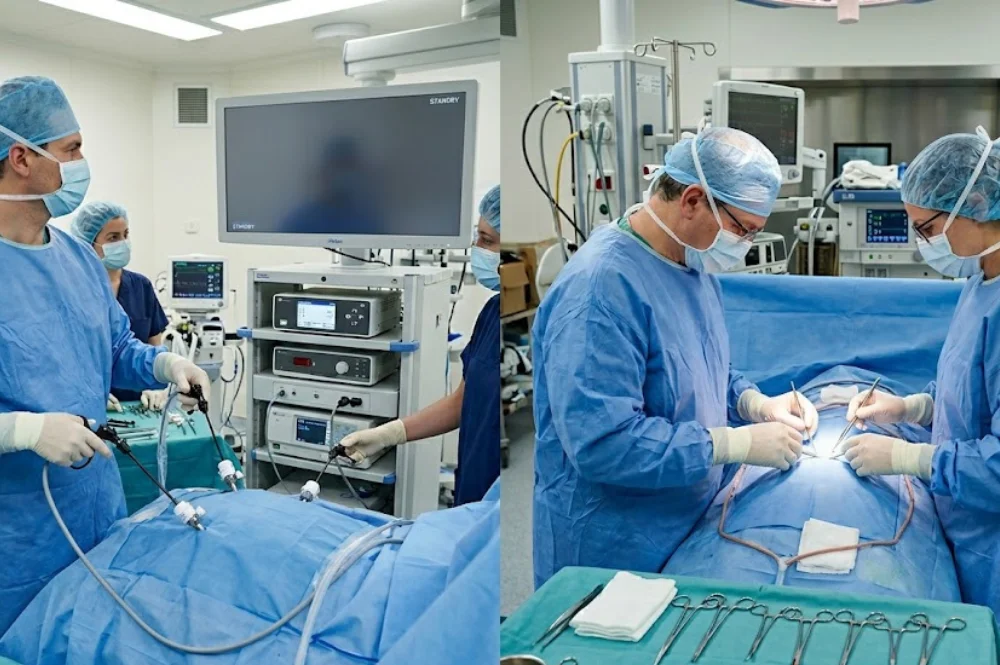
Advances in medical technology have transformed the way surgeries are performed today. While traditional open surgery has been a trusted approach for decades, laparoscopic surgery has emerged as a modern alternative that offers several benefits for patients. Also known as minimally invasive surgery or keyhole surgery, laparoscopic procedures are increasingly being used for a wide range of conditions, from gallbladder removal and hernia repair to gynecological and digestive system surgeries.
One of the most common questions patients ask before undergoing a procedure is whether laparoscopic surgery vs open surgery is the better option. The answer depends on several factors, including the patient’s condition, overall health, and the complexity of the operation. However, laparoscopic surgery benefits often make it the preferred choice because it involves smaller incisions, less pain, shorter hospital stays, and faster recovery times.
Understanding the differences between these two surgical approaches can help patients make informed decisions about their treatment. In this guide, we will explore how laparoscopic surgery works, its advantages, and how it compares to traditional open surgery.
What Is Laparoscopic Surgery?
Laparoscopic surgery is a modern surgical technique that allows surgeons to perform operations through small incisions rather than a large surgical cut. In the course of the operation, a tube fitted with a high-resolution camera known as a laparoscope is introduced into the body via an incision. Real-time pictures of the internal structures are provided by the camera to the monitor, allowing the surgeon to carry out the operation precisely.
If needed, extra incisions will be made to allow surgical tools to enter. With the help of the surgeon, who manipulates the tools in a precise manner to carry out the operation, the surgical process is completed. Patients generally report less pain after a laparoscopic operation because of the tiny incisions.
Minimally invasive surgery has become a preferred option for many procedures due to its safety, effectiveness, and patient-friendly recovery process. As technology continues to advance, more surgical treatments are being performed using keyhole surgery techniques.
Common Conditions Treated with Laparoscopic Surgery
It is used in diagnosing various diseases as well as performing surgical treatment of numerous diseases that affect various regions of the human body. Thanks to its high efficiency, laparoscopic surgery has become widely used by surgeons all over the world for performing different operations.
Laparoscopic gallbladder surgery is one of the most popular procedures among those that are carried out with the help of laparoscopy. It is widely used as a method of treating chronic diseases of the gall bladder, as well as for getting rid of the widespread problem of gallstones. Laparoscopic appendectomy is quite common for patients who suffer from appendicitis. This method helps to recover much faster than during traditional surgical intervention.
Laparoscopic hernia surgery is another widespread procedure that is often carried out using the method of laparoscopy. Moreover, various gynecological procedures, such as the treatment of ovarian cysts and some other reproductive health issues, are also often performed thanks to laparoscopic surgery.
Besides, doctors sometimes perform laparoscopy to obtain additional information about a certain organ in case a diagnosis cannot be made without carrying out this procedure. Finally, there are quite a lot of other procedures that are performed through laparoscopic surgery.
Major Benefits of Laparoscopic Surgery
The growing popularity of laparoscopic surgery is largely due to the many advantages it offers compared to traditional open surgery. Because the procedure is performed through small incisions, patients generally experience less trauma to the body and a smoother recovery process.
One of the biggest laparoscopic surgery benefits is reduced post-operative pain. As a result, there will be less injury to muscles and other parts of the body, thus improving post-surgery comfort. In most cases, the amount of pain relievers necessary will be reduced as well.
It is also worth mentioning that minimally invasive surgery requires a much shorter period of time spent in a hospital. Depending on the nature of the operation, most patients are allowed to go home after one or two days. Finally, those who have gone through keyhole surgery will be able to resume their work earlier compared to those who have undergone other types of procedures. Moreover, the aesthetic outcome of keyhole surgery will also be better for many patients.
Laparoscopic Surgery vs Open Surgery | Key Differences
When comparing laparoscopic surgery vs open surgery, several factors influence the patient experience and recovery process. Understanding these differences can help patients discuss treatment options more confidently with their healthcare provider.
| Factor | Laparoscopic Surgery | Open Surgery |
| Incision Size | Small | Larger |
| Pain | Less | More |
| Hospital Stay | Shorter | Longer |
| Recovery | Faster | Slower |
| Scarring | Minimal | More Visible |
| Infection Risk | Lower | Higher |
| Blood Loss | Usually Less | Usually More |
Is Laparoscopic Surgery Always the Better Option?
Although laparoscopic surgery benefits are significant, it is not always the best choice for every patient or medical condition. Certain situations may require a different surgical approach to ensure patient safety and achieve the best possible outcome.
For example, patients with extensive internal scarring from previous surgeries may not be suitable candidates for minimally invasive surgery. Likewise, severe trauma, complicated infections, large tumors, or unexpected findings during surgery may make open surgery the safer option.
In some cases, a procedure that begins as laparoscopic surgery may need to be converted to an open operation if the surgeon encounters technical challenges or safety concerns. Such decisions are made to protect the patient’s health and ensure the procedure can be completed successfully.
Rather than asking whether laparoscopic surgery vs open surgery is universally better, patients should focus on determining which approach is most appropriate for their specific condition. An experienced surgeon will evaluate the risks, benefits, and overall health status of each patient before recommending the most suitable treatment plan.
Conclusion
The comparison of laparoscopic surgery vs open surgery highlights how advances in medical technology have improved patient care and surgical outcomes. While both techniques remain valuable, laparoscopic surgery has become increasingly popular due to its smaller incisions, reduced pain, shorter hospital stays, and faster recovery times.
Nevertheless, all individuals and all illnesses are unique. For some situations, it would remain the safest and most advisable form of treatment. It is always important to seek out proper evaluation and consult with a surgeon in such cases.
Our team at Saleem Memorial Hospital is made up of expert surgeons who will offer you individualized surgical services. Regardless of whether your illness demands traditional forms of surgery or minimally invasive surgery, we make sure to deliver high-quality results for your health needs.
FAQs
What is the main difference between laparoscopic surgery and open surgery?
Laparoscopic surgery uses small incisions and a camera (minimally invasive), while open surgery requires a larger incision for direct access to the surgical area.
Is laparoscopic surgery less painful than open surgery?
Yes. Laparoscopic surgery usually causes less post-operative pain because it involves smaller incisions and less tissue damage than open surgery.
How long does recovery take after laparoscopic surgery?
Recovery after laparoscopic surgery is typically 1–3 weeks, depending on the procedure, while open surgery may take 4–8 weeks or longer.
What conditions can be treated with laparoscopic surgery?
Common conditions include gallbladder stones, appendicitis, hernia, ovarian cysts, and certain abdominal and gynecological disorders.
Is laparoscopic surgery safer than open surgery?
In most cases, yes. Laparoscopic surgery has a lower risk of infection, less blood loss, and faster recovery, but suitability depends on the patient’s condition.
Can laparoscopic surgery be converted to open surgery?
Yes. In some complex cases, surgeons may convert laparoscopic surgery to open surgery for patient safety or better access.
Who is a good candidate for laparoscopic surgery?
Patients with stable health conditions and treatable abdominal or pelvic issues are usually good candidates, but the final decision depends on the surgeon’s evaluation.
What are the benefits of minimally invasive surgery?
Key benefits of minimally invasive (laparoscopic) surgery include smaller scars, less pain, shorter hospital stay, faster recovery, and lower infection risk.