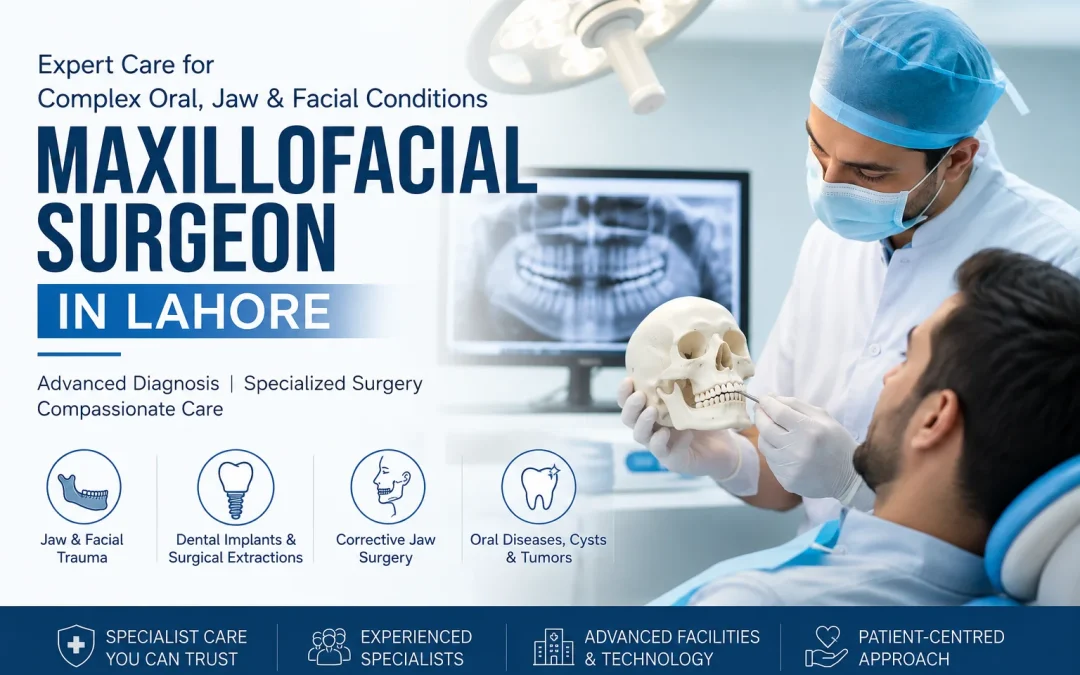
Understanding Maxillofacial Surgery in Lahore
A maxillofacial surgeon in Lahore specializes in conditions affecting the mouth, jaws, face, and facial bones. While general dentists handle routine dental problems, maxillofacial surgeons manage more complex conditions that may require surgical treatment.
Impacted wisdom teeth, difficult teeth removal, broken jaw, facial traumas, serious dental infections, jaw cysts and tumors, TMJ conditions, as well as some jaw and facial malformations may necessitate the help of a maxillofacial surgeon. In addition, if any condition influences chewing, speaking, face structure, and normal functioning of the jaw, a maxillofacial surgeon may operate on this problem.
Consultation with the specialist does not imply a surgical intervention. The doctor first needs to examine the patient, take into consideration his/her symptoms, medical and dental history, as well as some other factors. Imaging may also be advised. When choosing a maxillofacial surgeon in Lahore, patients should consider the surgeon’s qualifications, relevant experience, hospital facilities, diagnostic support, surgical services, and post-operative care.
What Conditions Does a Maxillofacial Surgeon Treat?
A maxillofacial surgeon treats a wide range of conditions involving the mouth, teeth, jaws, and face. One common problem is impacted wisdom teeth, which may cause pain, infection, swelling, or damage to nearby teeth and sometimes require surgical removal. These specialists also treat jaw and facial fractures caused by accidents, falls, or sports injuries. Depending on the injury, treatment may involve observation, stabilization, or surgical repair.
Other conditions include jaw cysts and tumors, severe oral infections, TMJ disorders, facial asymmetry, and jaw deformities. Some patients may require corrective jaw surgery when an abnormal jaw position affects their bite, chewing, speech, or facial balance. Persistent facial swelling, unexplained oral lumps, non-healing wounds, recurring infections, or difficulty opening the mouth should be professionally evaluated rather than ignored. Early assessment can help identify the cause and determine whether specialist treatment is required.
Common Procedures Performed by Maxillofacial Surgeons
The treatment provided by a maxillofacial surgeon depends on the patient’s specific condition. Not every problem requires surgery, and some cases can be managed with medication, dental treatment, or other non-surgical approaches. Common procedures include surgical wisdom tooth removal and complex tooth extraction, particularly when teeth are impacted or difficult to remove. Maxillofacial surgeons also perform jaw and facial fracture repair to restore bone alignment and function after significant injuries.
For certain jaw abnormalities, corrective jaw surgery may improve chewing, bite alignment, speech, and facial balance. Surgeons may also remove jaw cysts and tumors or perform biopsies when abnormal growths require investigation. Other procedures can include bone grafting, facial trauma reconstruction, and selected TMJ procedures. The appropriate treatment is determined after a detailed clinical assessment and, when necessary, diagnostic imaging. The main goal of maxillofacial treatment is to restore oral function, jaw movement, facial structure, and overall comfort while providing the safest and most appropriate treatment for the patient’s condition.
When Should You See a Maxillofacial Surgeon?
Not all cases require an oral maxillofacial surgeon, but a specialist needs to assess certain symptoms and health issues. Referral may be necessary in case of complex, chronic and surgically treatable dental or facial problems.
You will require consultation by an oral maxillofacial surgeon in Lahore if you have a severely impacted wisdom tooth, recurrent swelling or infections around a tooth, facial injury or a jaw trauma, recurring pain in the jaws, inability to open and close your mouth normally or problems with chewing due to misaligned jaws. Unusual bumps or swelling within your mouth or jaw bone, cysts and tumors, asymmetry of face or jaws, birth defects of the jaw bones and any condition that is not responding to regular dental treatment also require special consultation.
Following any accident, you need immediate consultation if you are experiencing facial swelling, facial bleeding, suspected fractures of the jaw bone, difficulty in breathing or swallowing, unconsciousness and severe pain. Specialist consultation at an early stage can help in diagnosis of the underlying cause of the problem and in determining what kind of treatment may be required – whether through medications, dentistry, observation or surgery.
Maxillofacial and Dental Specialists at Saleem Memorial Hospital, Lahore
Dr. Armaghan Israr Mirza: Oral and Maxillofacial Surgeon
Dr. Armaghan Israr Mirza holds BDS, FCPS, and FFDRCS qualifications. His areas of expertise include oral cancer, facial trauma, maxillofacial pathologies, facial deformities and aesthetic surgeries, and cleft lip and palate surgeries.
Dr. Fatima Tuz Zahra: Maxillofacial and Dental Surgeon
Dr. Fatima Tuz Zahra is qualified with BDS, FCPS, and FAOCMF (Germany). Her expertise includes maxillofacial trauma, head and neck oncology, dental implants, facial aesthetic surgery, surgical extractions, orofacial infections and pain management, orthognathic surgery, and salivary gland pathology.
Dr. Sara Riffat: Dental Surgeon
Dr. Sara Riffat holds a BDS and FCPS (R) in Orthodontics. Her areas of expertise include exodontia, minor surgical procedures, restorative and operative dentistry, including veneers, basic periodontal procedures, root planing, fixed braces, and clear aligners.
Dr. Asma Rafi Chaudhry: Orthodontics
Dr. Asma Rafi Chaudhry holds a BDS and FCPS in Orthodontics. Her expertise includes orthodontics, fixed braces, growth modification, surgical orthodontic cases, and teeth aligners.
Specialist Dental and Maxillofacial Care at SMH
The Dentistry and Maxillofacial department at Saleem Memorial Hospital, Lahore brings together specialists in oral and maxillofacial surgery, dental surgery, and orthodontics. This allows patients to receive appropriate specialist assessment for conditions ranging from facial trauma and oral diseases to jaw abnormalities, dental implants, complex extractions, and orthodontic concerns.
For the keyword “maxillofacial surgeon in Lahore,” the most directly relevant specialists are Dr. Armaghan Israr Mirza and Dr. Fatima Tuz Zahra, whose listed expertise specifically covers oral and maxillofacial surgery.
How to Choose the Right Maxillofacial Surgeon in Lahore
Finding the right maxillofacial surgeon in Lahore involves more than searching for the phrase “best maxillofacial surgeon.” The appropriate specialist depends on the patient’s condition and the type of treatment required. Start by checking the surgeon’s qualifications, specialist training, and experience with conditions similar to yours. A surgeon who regularly treats facial trauma may have different expertise from one who primarily performs corrective jaw surgery or manages oral and jaw lesions.
The hospital’s facilities are another aspect to consider. More complicated procedures might need diagnostics, operating rooms, anesthesiology support, laboratory services, and proper post-surgical observation. The presence of other medical professionals might come in handy in case the patient’s issue requires assistance from various fields of medicine. Before starting any therapy, it is necessary for the patient to know their diagnosis, treatment alternatives, possible outcomes, side effects, recovery time, and follow-up.
For those thinking about getting their care at Saleem Memorial Hospital in Lahore, the multidisciplinary approach of the hospital might become an asset in this case. In general, the right course of action would be to choose a maxillofacial specialist that is qualified and appropriate for your needs.
FAQs
What does a maxillofacial surgeon do?
A maxillofacial surgeon diagnoses and treats conditions affecting the mouth, jaws, facial bones, and surrounding tissues. Treatment may include complex tooth extraction, wisdom tooth surgery, facial trauma management, jaw surgery, cyst or tumor removal, and other oral and facial procedures.
What is the difference between a dentist and a maxillofacial surgeon?
A general dentist mainly provides routine oral and dental care, while a maxillofacial surgeon has specialized surgical training for complex conditions involving the mouth, jaws, and face. A dentist may refer a patient to a maxillofacial surgeon when surgical or specialist treatment is required.
When should I see a maxillofacial surgeon in Lahore?
You may need a maxillofacial surgeon for complicated wisdom teeth, jaw or facial fractures, persistent facial swelling, severe oral infections, jaw cysts or tumors, significant TMJ problems, or jaw abnormalities affecting chewing, speech, or facial structure.
Can a maxillofacial surgeon remove wisdom teeth?
Yes. Maxillofacial surgeons can perform surgical removal of impacted or complicated wisdom teeth, particularly when the tooth is difficult to remove because of its position, surrounding bone, roots, or proximity to important structures.
Can a maxillofacial surgeon treat a broken jaw?
Yes. Maxillofacial surgeons are trained to evaluate and treat many types of jaw and facial fractures. Depending on the injury, treatment may involve observation, stabilization, or surgical repair to restore proper alignment and function.
What is oral and maxillofacial surgery?
Oral and maxillofacial surgery is a specialized surgical field involving conditions of the mouth, teeth, jaws, facial bones, and related tissues. It includes procedures such as complex tooth removal, jaw surgery, facial trauma treatment, and removal of certain cysts or tumors.
How do I choose the best maxillofacial surgeon in Lahore?
Look for a specialist with appropriate qualifications, relevant surgical experience, and expertise related to your specific condition. Hospital facilities, diagnostic services, anesthesia support, emergency care, and post-operative follow-up are also important factors to consider.
Does maxillofacial surgery require hospitalization?
It depends on the procedure and the patient’s condition. Some procedures can be performed as day surgery, while complex jaw surgery, significant facial trauma, or other major procedures may require hospital admission and post-operative monitoring.
What should I expect after maxillofacial surgery?
Recovery depends on the procedure performed. Patients may experience swelling, discomfort, or temporary difficulty eating after some surgeries. The surgeon provides specific instructions regarding medication, diet, wound care, activity, and follow-up.
Is a maxillofacial surgeon also a dentist?
Oral and maxillofacial surgeons generally have dental training followed by additional specialized surgical education, although exact training pathways can vary by country. Their specialist practice focuses on surgical conditions involving the mouth, jaws, and face.
Where can I find maxillofacial care in Lahore?
Patients looking for maxillofacial care in Lahore should consider hospitals and specialists with appropriate qualifications, surgical facilities, diagnostic support, and follow-up services. Saleem Memorial Hospital, Lahore, is one healthcare option where patients can seek specialist evaluation as appropriate for their condition.
Is every jaw or dental problem treated with surgery?
No. Many dental and jaw conditions can be managed without surgery. A maxillofacial surgeon first evaluates the patient’s condition and determines whether medication, dental treatment, observation, or a surgical procedure is appropriate.