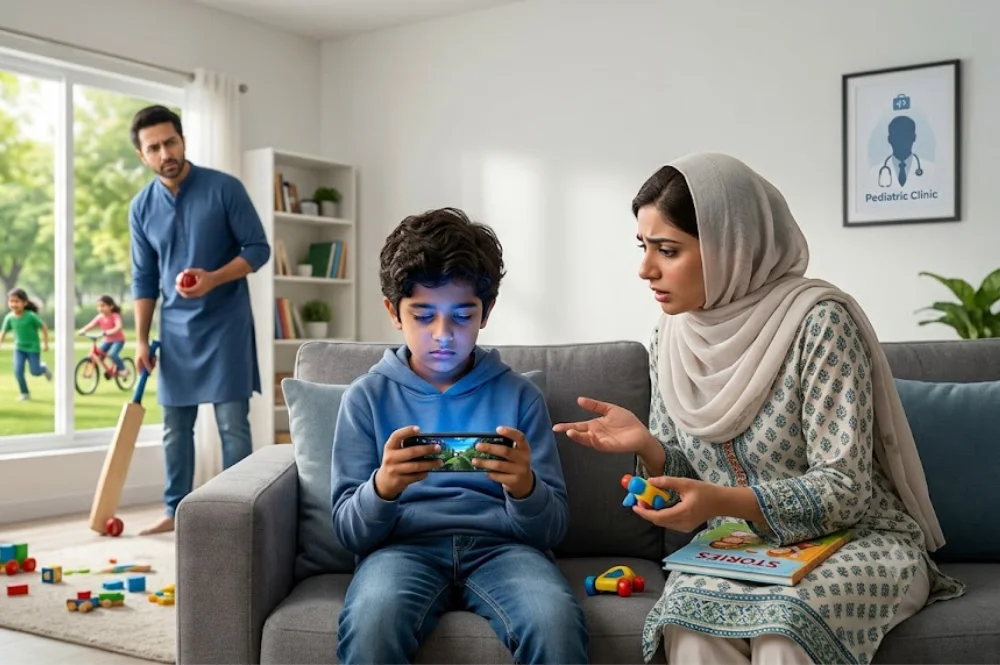
Screen Addiction in Children | A Growing Challenge for Families in Pakistan
Smartphones, tablets, televisions, and digital devices have become an essential part of everyday life. While technology offers many educational and entertainment benefits, excessive screen use is creating a new health challenge for children. Screen Addiction in Children is becoming increasingly common in Pakistan, where many children spend several hours each day using mobile phones, playing online games, watching videos, or scrolling through social media.
The shift toward digital learning after the COVID-19 pandemic, combined with easy access to smartphones and limited outdoor activities, has significantly increased children’s screen time. Although technology supports learning when used appropriately, excessive screen exposure can negatively affect a child’s physical health, emotional well-being, academic performance, and social development.
Many parents initially overlook the problem because screens often keep children occupied. However, when children become restless without a device, lose interest in outdoor play, struggle to concentrate, or experience sleep disturbances, these may be early signs of Screen Addiction in Children rather than normal childhood behavior.
Parents play a crucial role in establishing healthy digital habits. Recognizing the warning signs early and encouraging a balanced lifestyle can help prevent long-term health consequences. For families seeking professional guidance, Saleem Memorial Hospital, Lahore provides comprehensive pediatric healthcare and access to specialists who support children’s physical, emotional, and developmental well-being.
What Is Screen Addiction in Children?
Screen Addiction in Children refers to excessive or uncontrolled use of digital devices that begins to interfere with a child’s daily activities, health, education, and relationships. While using smartphones, tablets, computers, or televisions is not harmful by itself, problems arise when children become overly dependent on screens and struggle to limit their usage.
Unlike healthy screen use, where digital devices are used for learning, communication, or limited entertainment, screen addiction affects a child’s routine and behavior. Children may prefer screens over family interaction, outdoor games, reading, or other important developmental activities.
Several factors contribute to this growing issue, including:
- Easy access to smartphones and tablets
- Online gaming and social media platforms
- Unlimited video streaming
- Reduced outdoor play and physical activity
- Busy family schedules
- Lack of clear screen time rules at home
Early Warning Signs of Screen Addiction
Parents should watch for these common signs:
- Irritability or anger when screen time is limited
- Spending most free time on digital devices
- Difficulty concentrating on schoolwork
- Declining academic performance
- Poor sleep or staying awake late using devices
- Reduced interest in hobbies or outdoor activities
- Less interaction with family and friends
- Frequent complaints of headaches or eye discomfort
- Ignoring daily responsibilities to continue using screens
According to international pediatric recommendations, screen time should be age-appropriate and balanced with physical activity, quality sleep, and face-to-face interaction. The goal is not to eliminate technology but to use it in a healthy and controlled way.
How Excessive Screen Time Affects Children’s Health
Excessive screen use can influence almost every aspect of a child’s growth and development. The effects often develop gradually, making it important for parents to identify the problem early and take appropriate action.
Physical Health Effects
Long hours spent using digital devices can lead to several physical health problems, including:
- Digital eye strain, dry eyes, and blurred vision
- Frequent headaches
- Neck, shoulder, and back pain due to poor posture
- Reduced physical activity and increased risk of childhood obesity
- Poor hand and wrist posture from prolonged device use
- Fatigue caused by extended screen exposure
Mental and Emotional Well-being
Research suggests that excessive screen time may also affect a child’s emotional health and behavior. Some children may experience:
- Increased anxiety and irritability
- Mood swings and emotional outbursts
- Difficulty managing frustration
- Reduced attention span and concentration
- Lower self-esteem due to excessive social media exposure
- Social withdrawal and reduced family interaction
Learning and Development
Healthy childhood development depends on active learning, creativity, communication, and social interaction. When screen time replaces these activities, it can affect important developmental skills.
Possible impacts include:
- Reduced attention during classroom learning
- Difficulty remembering new information
- Delayed language and communication skills in younger children
- Lower interest in reading and creative play
- Poor problem-solving and critical thinking skills
- Declining academic performance due to distraction
Technology itself is not the problem. The real concern is excessive, unsupervised, or unbalanced use. By maintaining healthy screen habits and encouraging physical activity, reading, outdoor play, and family interaction, parents can help children enjoy the benefits of technology while protecting their overall health and development.
When Should Parents Seek Professional Help?
It is normal for children to enjoy using digital devices, but when screen use begins to affect their health, education, or relationships, professional guidance may be needed. Early intervention can help prevent long-term physical, emotional, and behavioral problems.
Parents should consider consulting a healthcare professional if their child:
- Becomes anxious, angry, or aggressive when screen time is limited.
- Spends most of the day on a mobile phone, tablet, or computer.
- Experiences persistent headaches, eye strain, or neck and back pain.
- Has difficulty sleeping or frequently stays awake late using digital devices.
- Shows a decline in school performance or concentration.
- Avoids outdoor activities, sports, or spending time with family and friends.
- Displays signs of anxiety, depression, or social withdrawal.
At Saleem Memorial Hospital (SMH), Lahore, children with screen-related health concerns can benefit from a multidisciplinary approach. Depending on the child’s symptoms, care may involve pediatricians, neurologists, ophthalmologists, psychologists, nutrition experts, and other specialists working together to support healthy physical and emotional development.
Practical Ways to Reduce Screen Addiction in Children
Helping children develop healthy digital habits does not mean completely eliminating technology. Instead, parents should focus on creating a balanced routine where screens are only one part of a child’s day.
Here are practical strategies that families can implement:
Set Daily Screen Time Limits
Create clear, age-appropriate rules for recreational screen use and ensure they are followed consistently.
Encourage Outdoor Play
Activities such as cycling, walking, football, or playing in the park improve physical fitness, reduce stress, and naturally decrease screen dependence.
Create Screen-Free Zones
Keep mobile phones, tablets, and televisions out of bedrooms and avoid using devices during family meals to encourage conversation and better sleep.
Build Healthy Family Habits
Parents are role models. Limiting your own screen time and participating in family activities encourages children to do the same.
Promote Offline Learning
Encourage reading books, drawing, puzzles, board games, music, and creative hobbies that stimulate learning without digital devices.
Establish a Healthy Bedtime Routine
Avoid screens at least one hour before bedtime. Reading a story or engaging in quiet activities helps children sleep better.
Monitor Digital Content
Know what your child is watching, playing, and browsing. Choose educational and age-appropriate content while discussing online safety.
Reward Positive Behaviour
Instead of using punishment, praise children for spending time outdoors, completing homework, or participating in family activities. Positive reinforcement often produces better long-term results.
Small, consistent changes in daily routines can significantly reduce Screen Addiction in Children and promote healthier development.
Why Parents Trust Saleem Memorial Hospital for Children’s Health
Children’s health involves much more than treating illness. It requires understanding their physical growth, emotional well-being, learning, and overall development. Saleem Memorial Hospital, Lahore provides comprehensive pediatric care designed to support children through every stage of childhood.
Families choose SMH because of:
- Experienced pediatric specialists focused on children’s overall health and development.
- Comprehensive evaluation of growth, behavior, sleep, and developmental concerns.
- Access to ophthalmology services for children experiencing vision problems related to excessive screen use.
- Neurology consultation for children with persistent headaches, concentration difficulties, or neurological symptoms when indicated.
- Psychological and behavioral support for emotional and developmental concerns.
- Nutritional guidance to encourage healthy eating habits and prevent childhood obesity.
- Modern diagnostic facilities and evidence-based treatment plans.
- A family-centered approach that involves parents in every stage of care.
Whether a child is experiencing vision strain, sleep problems, behavioral changes, or developmental concerns related to excessive screen use, Saleem Memorial Hospital (SMH), Lahore, provides coordinated, compassionate care to help children achieve healthier lifestyles and reach their full potential.
Conclusion
Technology is an important part of modern life, but maintaining a healthy balance is essential for every child’s physical, mental, and emotional development. Screen Addiction in Children is becoming a growing concern in Pakistan as more children spend excessive time on smartphones, tablets, computers, and gaming devices. When left unaddressed, excessive screen use can affect sleep, vision, learning, physical fitness, behavior, and family relationships.
The good news is that screen addiction is preventable. By setting healthy screen time limits, encouraging outdoor play, promoting family interaction, and monitoring digital content, parents can help children develop responsible technology habits while still benefiting from digital learning.
If your child shows persistent signs of excessive screen use, behavioral changes, poor sleep, declining academic performance, or vision-related complaints, seeking professional advice is an important step. Saleem Memorial Hospital, Lahore offers comprehensive pediatric care with access to experienced specialists who can assess your child’s overall health and provide personalized guidance to support healthy growth and development.
Healthy digital habits begin at home, and early intervention can make a lasting difference in your child’s future.
FAQs
What is screen addiction in children?
Screen Addiction in Children is excessive use of smartphones, tablets, computers, televisions, or gaming devices that negatively affects a child’s physical health, emotional well-being, education, sleep, or social relationships. When children struggle to reduce screen time despite harmful effects, professional guidance may be beneficial.
What are the common signs of screen addiction in children?
Common symptoms include spending excessive hours on digital devices, irritability when screen time is limited, poor concentration, declining academic performance, sleep disturbances, headaches, eye strain, reduced physical activity, and loss of interest in family or outdoor activities.
How much screen time is recommended for children?
Screen time recommendations vary by age. Health experts generally advise avoiding screen exposure for children under 2 years except for video calls, while older children should have balanced, supervised screen use combined with adequate sleep, physical activity, learning, and family interaction. Parents should focus on both the quality and duration of screen time.
Can excessive screen time affect a child’s brain development?
Yes. Excessive and unsupervised screen use may affect attention, memory, language development, emotional regulation, and learning, especially in younger children. Balanced digital habits and regular offline activities support healthy brain development.
Does screen addiction affect children’s sleep?
Yes. Using smartphones, tablets, or computers before bedtime can interfere with melatonin production, making it harder for children to fall asleep. Poor sleep may lead to daytime fatigue, reduced concentration, mood changes, and lower academic performance.
Can screen addiction cause behavioral problems?
Excessive screen time has been associated with irritability, anxiety, aggression, mood swings, social withdrawal, and difficulty concentrating. Early intervention and healthy digital routines can help improve these behaviors.
How can parents reduce screen addiction in children?
Parents can reduce Screen Addiction in Children by setting daily screen time limits, creating screen-free zones at home, encouraging outdoor play, promoting reading and creative hobbies, monitoring online content, establishing a healthy bedtime routine, and leading by example through responsible technology use.
When should I consult a doctor for screen addiction?
You should seek medical advice if excessive screen use is affecting your child’s sleep, school performance, behavior, emotional well-being, vision, physical activity, or relationships. Early assessment helps identify underlying concerns and supports healthy development.
Can screen addiction be treated?
Yes. Most children improve with a combination of structured screen time limits, behavioral changes, parental involvement, healthy routines, and professional support when needed. Early intervention often leads to better long-term outcomes.
Why choose Saleem Memorial Hospital for children’s health?
Saleem Memorial Hospital, Lahore, provides comprehensive pediatric care supported by experienced specialists, modern diagnostic facilities, and a multidisciplinary approach. Whether a child requires evaluation for behavioral changes, vision concerns, developmental issues, or general health, SMH offers personalized care focused on promoting healthy childhood growth and well-being.