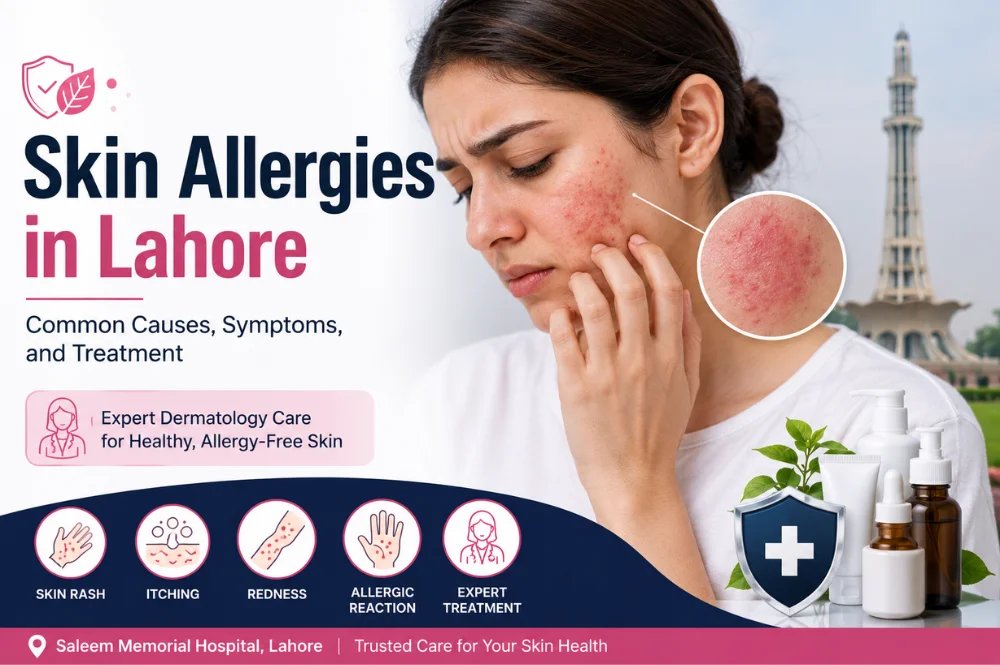
What Are Skin Allergies?
Skin allergies are reactions that occur when the immune system responds to a substance that it considers harmful, even though it may be harmless to most people. These reactions can affect different parts of the body and may cause symptoms such as itching, redness, swelling, dryness, rashes, or small bumps on the skin. In some cases, the reaction may develop shortly after exposure to a trigger, while other allergies can take longer to appear.
Some common causes include cosmetics or skincare products, soap, detergent, fragrances, metals like nickel, medicines, plants, insect stings, and environmental causes. In Lahore, dust, pollution, heat, and different environmental causes can irritate sensitive skin, but this does not mean that there will be an allergic reaction in everyone.
In some cases, a skin allergy may look like eczema, infection, or contact dermatitis. This is why it is necessary to identify the exact cause before beginning any treatment. This can be done by a skin specialist who would diagnose the affected area, your symptoms, and possible causes of the allergy.
For people looking for skin allergy treatment in Lahore, getting an accurate diagnosis is an important first step. Avoiding the suspected trigger may be enough for mild reactions, while persistent or recurring symptoms may require treatment recommended by a qualified dermatologist.
Common Causes and Triggers of Skin Allergies
Skin allergies can develop after direct contact with an irritating or allergenic substance, exposure to certain environmental factors, or sometimes as a reaction to medications. One of the most common forms is contact dermatitis, which can occur when the skin reacts to substances such as perfumes, cosmetics, hair dyes, soaps, detergents, jewelry, or certain chemicals.
Allergies related to personal care products often occur due to fragrances, preservatives, and other ingredients that can trigger a reaction. The application of hair and skin care products may lead to redness, itching, swelling, and irritation if they are frequently used. People may have an allergic reaction to the metals present in jewelry, watches, belt buckles, and similar objects that they wear daily.
Environmental factors may also affect the skin. Such environmental allergens as dust, pollen, pollution, high temperatures, and others can worsen the condition of people with sensitive skin. However, it is important to know the difference between allergy and mere irritation since the treatment of both conditions differs. Finally, some medications may cause allergies to the skin. The signs of such reactions include rashes, itching, hives, and swelling; they may sometimes be life-threatening. If the skin problems appear shortly after taking a certain medicine, the person should consult a doctor and not stop taking the drug on his/her own.
Identifying the specific trigger can help reduce repeated reactions. A skin allergy doctor in Lahore can assess the pattern of symptoms, ask about recent exposures, and recommend appropriate evaluation and treatment based on the individual case.
Common Symptoms of Skin Allergies
The symptoms of a skin allergy can vary depending on the trigger, severity of the reaction, and individual sensitivity. The most common symptoms include persistent itching, redness, dry or irritated skin, swelling, and visible rashes. Some people may develop small bumps, blisters, or patches of inflamed skin in the affected area.
Contact allergies tend to be found at locations where the skin is exposed to the allergen. For instance, allergies caused by cosmetics will be visible on the face. In addition, there may be redness and itching at the locations of metal parts on jewelry on the neck, ears, wrist, and other areas. Another common symptom of an allergic reaction is hives, which consist of itchy welts that emerge rather suddenly and spread from one part of the body to another. Swelling may occur in areas such as the eyes, lips, and face.
Skin allergies are manageable with proper treatment, but some skin symptoms require emergency action. These include difficulty breathing, swelling of the tongue and throat, dizziness, fainting, or severe allergic reactions developing rather quickly. If a rash, itching, or swelling continues to return without an obvious explanation, consulting a skin specialist for allergies can help determine the underlying cause. Early assessment can also prevent repeated exposure to the trigger and reduce the risk of ongoing skin problems.
Dermatologists at Saleem Memorial Hospital Lahore
Patients searching for skin allergy treatment in Lahore can consult qualified dermatologists at Saleem Memorial Hospital Lahore. The hospital’s dermatology department provides specialist care for a range of skin conditions, including clinical and medical dermatology concerns. Its current dermatology team includes Dr. Tariq Zaman, Dr. Sumara Rashid, and Dr. Aisha Malik.
Dr. Tariq Zaman | Dermatologist
Dr. Tariq Zaman is a dermatologist at Saleem Memorial Hospital Lahore with qualifications including MBBS, MCPS, and FCPS in Dermatology. His areas of expertise include clinical dermatology and medical dermatology, making him suitable for patients seeking professional evaluation of a wide range of skin conditions. His current consultation timings at the hospital are Wednesday and Saturday from 7 pm to 9 pm.
Dr. Sumara Rashid | Dermatologist
Dr. Sumara Rashid is a dermatologist with MBBS and FCPS in Dermatology. Her expertise includes clinical dermatology and procedures such as cautery, biopsy, and laser treatments. Patients can consult her at Saleem Memorial Hospital Lahore for evaluation and management of various dermatological concerns. Her current hospital timings are Monday and Thursday from 6 pm to 8 pm.
Dr. Aisha Malik | Consultant Dermatologist
Dr. Aisha Malik is a consultant dermatologist at Saleem Memorial Hospital Lahore. She holds MBBS, MCPS in Dermatology, and FCPS in Dermatology. Her areas of expertise include clinical dermatology, laser specialties, and cosmetology. Her current consultation timings are Tuesday, Thursday, and Saturday from 4 pm to 6 pm.
When choosing a dermatologist for a skin allergy, patients should consider the doctor’s qualifications, experience, area of expertise, and the nature of their symptoms. A proper consultation can help distinguish an allergic reaction from other skin conditions and determine an appropriate treatment approach. For recurring, severe, or unexplained skin reactions, professional dermatological assessment is preferable to relying solely on over-the-counter products.
Diagnosis and Treatment of Skin Allergies
The diagnosis of a skin allergy starts with a detailed conversation about the patient’s symptoms, exposure history, use of skincare products, medications, and any materials in contact with the skin. Sometimes, a dermatologist looks at the appearance, location, and pattern of the rash to see if it is an allergy, irritant reaction, infection, eczema, or some other skin condition.
At times, the doctor may recommend additional examinations to find out the trigger of the condition. According to the symptoms and cause, a dermatologist decides which type of tests to conduct (for example, a patch test). It is especially helpful if the skin allergy occurs frequently, since the avoidance of the triggering agent is essential for the prevention of allergic attacks.
The type and severity of the reaction determine the treatment. Mild allergies will resolve themselves if the trigger is avoided and proper skin care is practiced. However, sometimes a patient requires certain medicines or topical treatments to reduce itchiness, inflammation, and redness. Medication should be prescribed according to the patient’s condition, not randomly chosen creams or drugs.
For people looking for skin allergy treatment in Lahore, professional diagnosis can be especially useful when symptoms are persistent, severe, or repeatedly returning. Self-treatment may sometimes mask the symptoms without addressing the underlying cause, so a consultation with a qualified skin allergy doctor in Lahore can help develop a more appropriate treatment plan.
How to Prevent Skin Allergies and Reduce Recurring Reactions
Preventing skin allergies starts with identifying and avoiding the substances that trigger a reaction. If a particular cosmetic, soap, detergent, fragrance, metal, or other product is suspected, reducing exposure can help prevent the problem from returning. Keeping a record of products or substances used before a reaction develops can also make it easier to identify possible triggers.
Individuals who have problems with sensitive skin might find it advantageous to use skin care products without any strong chemicals and without any fragrances. There are also some simple measures that need to be taken by all individuals in order to take care of their skin – it is necessary to keep the skin moist and not to scratch the skin when it itches, because this activity may hurt the skin and lead to irritation or infections.
There are also environmental factors that may affect individuals’ skin. When there is too much dust, pollution, or excessive heat, it is better to protect one’s skin and take proper care of hygiene. However, one should avoid making generalizations regarding possible causes of rash; each person’s triggers are different. If allergies persist even when people avoid the triggers that usually cause allergies, then it is necessary to consult a dermatologist and determine whether the problem lies in other allergens or other skin problems.
Explore more about skin specialists in Lahore.
FAQs
What are the most common symptoms of a skin allergy?
Common symptoms include itching, redness, swelling, rashes, dryness, bumps, and sometimes blisters or hives. Symptoms can vary depending on the allergen and the severity of the reaction.
What causes skin allergies?
Skin allergies may be triggered by cosmetics, fragrances, soaps, detergents, metals, medications, plants, insect bites, and other substances. Environmental factors can also worsen irritation in people with sensitive skin.
When should I see a dermatologist for a skin allergy?
You should consider seeing a dermatologist if the rash is persistent, repeatedly returns, spreads, becomes painful, causes significant itching, or does not improve after avoiding a suspected trigger. Immediate medical attention is needed for symptoms such as difficulty breathing or swelling of the throat or tongue.
Can skin allergies be permanently cured?
Some allergic reactions can be effectively controlled by identifying and avoiding the responsible trigger. Treatment can manage symptoms, but whether an allergy completely goes away depends on its cause and the individual.
What treatment is available for skin allergies?
Treatment depends on the type and severity of the reaction. A dermatologist may recommend trigger avoidance, appropriate skin-care measures, topical treatments, or medicines to control symptoms. The specific treatment should be determined after evaluation.
Can cosmetics cause skin allergies?
Yes. Cosmetics, fragrances, hair products, and skincare products may contain ingredients that trigger allergic reactions or irritation in some people. If a reaction repeatedly occurs after using a particular product, stop using it and discuss the symptoms with a dermatologist.
Which dermatologist can I consult at Saleem Memorial Hospital Lahore?
Saleem Memorial Hospital Lahore’s dermatology department currently lists Dr. Tariq Zaman, Dr. Sumara Rashid, and Dr. Aisha Malik as dermatology consultants. Their qualifications and areas of expertise vary, so patients can discuss their symptoms with the appropriate dermatologist during consultation.
Is skin allergy treatment available at Saleem Memorial Hospital Lahore?
Yes. Saleem Memorial Hospital Lahore has a dedicated dermatology department where patients can consult dermatologists for the assessment and management of different skin conditions.
Can I use an over-the-counter cream for a skin allergy?
It is better to identify the cause of the reaction before using medicated creams, particularly if the rash is persistent or severe. Some products may temporarily reduce symptoms without treating the underlying problem, while inappropriate use can sometimes worsen certain skin conditions.
What should I do if my skin allergy keeps coming back?
Recurring skin reactions should be evaluated by a dermatologist. Keep track of products, medications, foods, environmental exposures, or other factors that occur before symptoms appear. This information can help the dermatologist identify possible triggers and determine the appropriate treatment.