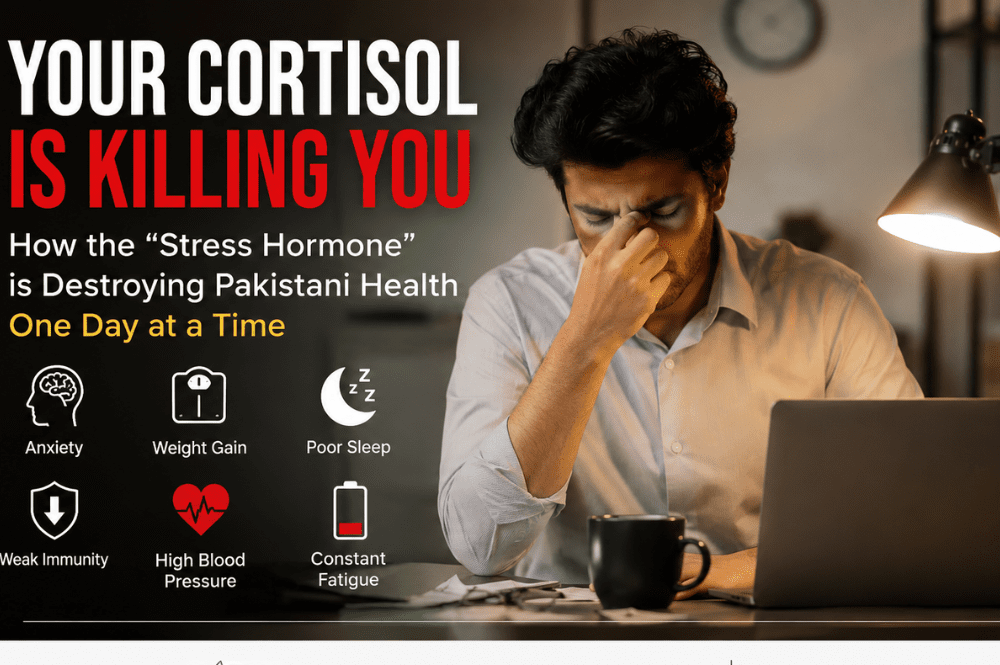
How Your Cortisol is Killing You
Why are so many people in Pakistan constantly tired, anxious, gaining weight, and struggling to sleep, even when they are “technically fine”? The answer is often not visible on routine checkups, but it is quietly shaping modern health in dangerous ways: chronic stress and cortisol imbalance.
While cortisol, also known as the stress hormone, is generally harmless on its own, in truth, it enables you to feel alert and ready to take on your responsibilities during the day. However, when everyday life becomes overwhelming due to factors such as deadlines, economic struggles, academic pressures, rush hour traffic, or simply a lack of sleep, your cortisol level will not rise briefly anymore; instead, it will remain consistently high throughout the day.
Consequently, it may impact your physical well-being just as much as your psychological state without you noticing that there is an ongoing problem until the symptoms become apparent. In Pakistan, where stress is usually taken lightly or dismissed entirely, this is especially dangerous.
Currently, this increasingly frequent condition is amongst the most underdiagnosed diseases, which affects millions of workers, students, and even teenagers in today’s society. Identifying this illness at its earlier stages can save you from developing serious illnesses later in life, not to mention being able to recognize when you need expert advice from professionals at Saleem Memorial Hospital Lahore, considered to be one of the best hospitals in Lahore.
What is Cortisol and Why It Matters?
Cortisol is a natural hormone produced by the adrenal glands, located above your kidneys. Its main job is to help your body handle stress and maintain balance in emergency situations. It is part of your body’s “fight or flight” system.
Under normal conditions, cortisol levels increase early in the morning in order to wake a person up, and reduces later on at night to help people sleep properly. Such fluctuations are vital for people in terms of energy production, mental clarity, and life in general.
Nonetheless, everything starts to go wrong once the pressure becomes continuous and persistent. As soon as one feels it regularly during his/her daily activities, whether work, studies, financial troubles, or personal matters, their brain tells the body that he/she is under pressure, and as a result, it should produce more hormones.
This phenomenon results in excessive production of such a hormone as cortisol all day long, which is called “cortisol imbalance” and is characterized by serious complications within other body systems due to its influence on many different processes.
Today’s lifestyle makes people live in stressful conditions; especially the residents of large cities like Lahore do not realize that their lives become unbearable until it is too late because of being constantly under the effect of stress and pressure. Eventually, such a phenomenon will be the basis for some diseases. Therefore, the understanding of how this hormone functions becomes important.
Causes + Symptoms of High Cortisol in Pakistan
In Pakistan, stress is not exclusive to just one category; it can affect students, professionals, entrepreneurs, and even housewives. The daily living in Lahore can keep the body under constant pressure, causing it to secrete excess cortisol regularly.
Causes of Increased Cortisol Levels
The primary cause is financial and occupational stress, characterized by long working hours and economic instability, which can lead to persistent mental stress. Students also suffer from increased levels of cortisol due to competition and exam pressures.
Another major cause is improper sleeping habits because of staying up at night and using cell phones and other gadgets. It is difficult for the body to reset itself when it does not get adequate rest. Modern habits of using the cell phone excessively, overuse of caffeine, and a lack of exercise can add to an already bad situation, while mental stress can increase cortisol levels even more.
Symptoms of High Cortisol
If there is a prolonged presence of high levels of cortisol in the body, then there will be various symptoms associated with it. Fatigue and feeling tired after getting enough rest are common. Unintentional weight gain, especially around the stomach area, is another symptom.
Mental symptoms also occur with high cortisol. People feel anxious, irritable, and unable to concentrate, but they may just attribute this to stress. Insomnia and poor sleep are other possible symptoms.
On the physical side, high cortisol causes people to have headaches, lack of focus, muscle weakness, and even high blood pressure in some cases. The onset of symptoms tends to happen gradually, so most people overlook them. It is important to understand that not all these symptoms are caused by stress alone; they may actually be signs of a hormone imbalance problem.
Health Risks + Why It’s a Silent Epidemic
When cortisol stays elevated for a long time, it stops being just a “stress response” and starts becoming a system-wide disruptor in the body. This is where temporary stress turns into a long-term health risk. One of the most serious effects is on blood sugar regulation, which increases the risk of Type 2 diabetes. High cortisol pushes the body to release more glucose into the bloodstream, and over time, this can lead to insulin resistance.
Another major impact is on the cardiovascular system. Constant stress keeps the heart working harder, which may contribute to high blood pressure (hypertension) and increase the risk of heart disease. Many people in Pakistan ignore early warning signs like fatigue or headaches, not realizing they may be stress-related.
Cortisol also affects mental health deeply. Prolonged imbalance is linked with anxiety disorders, depression, mood swings, and emotional exhaustion. This is often overlooked because symptoms are mistaken for “normal life pressure.” Furthermore, chronic stress makes the body susceptible to infectious diseases and makes recovery slower due to a weaker immune system. In the long run, even metabolism and digestion could be affected.
In Pakistan, this problem is becoming an unspoken epidemic since people have developed a mindset that stress is a part of their lives, and they do not need to take any action. They follow their daily routine while being unaware of the fact that their body is always functioning in “survival mode.” Usually, the condition turns into a chronic disease when people seek treatment.
Cortisol imbalance silently becomes one of the most underestimated factors behind various lifestyle disorders.
Diagnosis, Treatment, and Prevention
The good news is that cortisol-related health problems can be identified early and managed effectively with the right approach. The first step is proper medical diagnosis, especially if symptoms are persistent.
Diagnosis
Doctors may recommend blood or saliva cortisol tests to evaluate hormone levels. In many cases, a complete health assessment is needed to understand whether symptoms are caused by stress, lifestyle factors, or an underlying hormonal imbalance. Mental health screening may also be suggested if anxiety or depression symptoms are present.
Treatment Options
Treatment usually depends on the severity of the condition. In mild cases, lifestyle changes play the most important role. This includes improving sleep patterns, reducing caffeine intake, and maintaining a balanced routine.
For more advanced cases, doctors may recommend stress management therapy, counseling, or medical treatment to regulate hormone imbalance. The goal is not only to reduce cortisol but also to restore overall body balance.
Prevention (Long-Term Control)
Prevention of excess cortisol levels mostly depends on lifestyle changes. Physical activity, which includes walking and exercise, is necessary for managing stress hormones. Sleep routine should be consistent because cortisol levels follow a certain circadian rhythm.
Limiting screen exposure at night, practicing relaxing exercises like deep breathing, and eating nutritious foods are effective methods of lowering stress levels. Sometimes, minor changes in lifestyle could have a major impact, provided that they are regularly followed.
Healthcare Services in Lahore
In case you feel that you are suffering from excessive levels of stress or are fatigued due to hormone imbalances, you should consult a specialist urgently. Reliable healthcare services are provided by Saleem Memorial Hospital, Lahore, where you will receive a proper diagnosis and appropriate treatment.
It has become increasingly clear in recent years that stress should be considered a physical disease. People start realizing that stress management cannot be achieved without consulting reliable doctors at the best hospital in Lahore.
Conclusion
Cortisol is important for survival, but in case the body remains under continuous stress, then there may be instances where this hormone turns out to be a major threat to overall well-being. With the fast pace of modern life, particularly in urban regions of Pakistan, constant stress is no longer an emotional problem. Instead, it represents a serious physical threat to your health.
From insomnia and obesity to the emergence of disorders such as diabetes, high blood pressure, and depression, the list of adverse effects caused by unbalanced cortisol production in the body is very long. The main problem here is that such symptoms appear gradually and therefore do not attract people’s attention. Fortunately, in spite of their severity, these problems can still be addressed effectively.
For individuals experiencing ongoing stress symptoms or hormonal imbalance, professional consultation is important. Trusted healthcare support is available at Saleem Memorial Hospital Lahore, where patients can receive proper diagnosis and care from experienced medical professionals. Taking timely action today can protect your health for the future and help restore balance to both body and mind.
FAQs
What is cortisol, and why is it called the stress hormone?
Cortisol is a hormone produced by the adrenal glands that helps the body respond to stress. It is called the “stress hormone” because it increases when you face pressure, helping your body stay alert and active in short-term situations.
What are the symptoms of high cortisol levels?
Common symptoms include constant fatigue, weight gain (especially around the belly), poor sleep, anxiety, irritability, headaches, brain fog, and high blood pressure. Many people ignore these signs, thinking they are just routine stress.
Can chronic stress really cause physical diseases?
Yes. Long-term high cortisol levels are linked to serious conditions such as Type 2 diabetes, hypertension, heart disease, weakened immunity, and mental health disorders like anxiety and depression.
How is a cortisol imbalance diagnosed?
Doctors may recommend blood or saliva tests to measure cortisol levels. A complete health evaluation is often done to understand whether symptoms are caused by stress, lifestyle factors, or hormonal imbalance.
How can I reduce cortisol levels naturally?
You can reduce cortisol by improving sleep, exercising regularly, eating a balanced diet, limiting caffeine, reducing screen time, and practising relaxation techniques like deep breathing or meditation.
When should I see a doctor for stress-related symptoms?
If fatigue, anxiety, sleep problems, or weight changes continue for more than a few weeks and affect your daily life, it is important to consult a doctor for proper evaluation and treatment.